
Blog
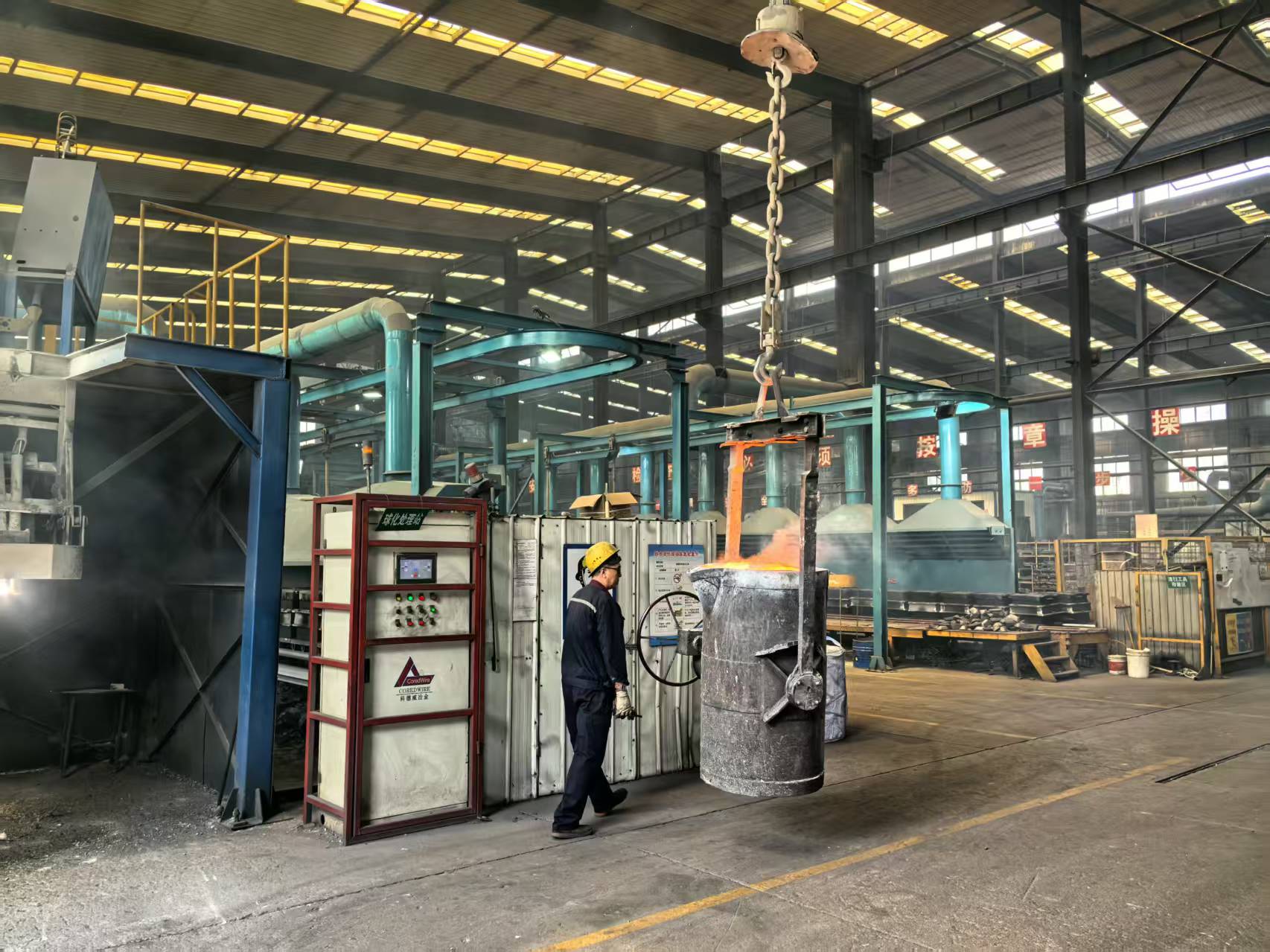
Iron casting and resin sand casting automatic production line development in China
Over the past few decades, China has solidified its position as one of the world's leading manufacturers of foundry machinery and casting equipment. The industry's remarkable trajectory, particularly from the mid-1980s onward, showcases a strategic evolution from import dependency to growing self-sufficiency and technological sophistication.
The foundational shift began in 1985 when significant national policy support was directed toward the foundry machinery sector. This included the allocation of substantial special loans, marking the largest government-backed investment in the industry since the country's founding. This critical support catalyzed the development of key technologies, leading to breakthroughs in essential equipment such as large-scale sand blast cleaning machines, flaskless vertical injection squeeze molding machines, water glass sand reclamation systems, and advanced metal melting and pouring equipment.
A major milestone was achieved in resin sand casting equipment. Chinese manufacturers successfully developed and scaled production to meet the basic demands of the domestic market, fundamentally altering a landscape previously dominated by imported machinery. This move toward import substitution extended into more complex realms. The domestic capability to produce high-level automated casting production lines has progressively addressed the needs of critical sectors, including the automotive industry, by partially replacing imported castings for engine blocks and cylinder heads.
Today, China's foundry machinery manufacturing capabilities encompass a broad spectrum of advanced equipment. The industry now competitively produces:
-
High-precision automatic core making machines
-
Automated casting cleaning and finishing systems
-
Integrated automated sand preparation and reclamation plants
-
Advanced die-casting machines
-
Large-scale and precision casting equipment
The period from 1985 to 2005 was characterized by relatively rapid development, establishing a robust industrial base. However, a professional assessment acknowledges ongoing challenges. While the gap with foreign advanced manufacturing levels has narrowed, a significant disparity persists in areas like core innovation, operational stability, reliability, and automation intelligence. Furthermore, the industry contends with issues such as cyclical market fluctuations and a relatively fragmented competitive landscape, which impact overall market concentration.
Future Outlook and Strategic Direction
For the Chinese foundry machinery industry to ascend to the next tier of global leadership, sustained efforts must focus on:
-
Technology Upgrading: Transitioning from manufacturing scale to technological leadership through R&D in smart foundry solutions, IoT integration, and AI-driven process control.
-
Quality and Reliability: Enhancing the durability, precision, and consistency of equipment to match international premium benchmarks.
-
Industry Consolidation: Fostering a more concentrated and specialized market structure to drive innovation and economies of scale.
-
Sustainable Solutions: Developing more energy-efficient and environmentally friendly foundry technologies to meet global green manufacturing standards.
In conclusion, China's foundry machinery industry has demonstrated extraordinary growth, transforming from a follower into a formidable global competitor. By addressing its current constraints and strategically focusing on high-value innovation, the sector is poised to not only solidify its market share but also to shape the future of global foundry and precision metal processing technologies.
CATEGORIES
LATEST NEWS
CONTACT US
Name: John Yu
Mobile:+86 15941574876
Tel:+86 15941574876
Whatsapp:+86 15941574876
Email:john_yu@metals-casting.com
Add:Wangjiapu Group, Xinan Village, Qianyang Town, Donggang City, Dandong City, Liaoning Province, China.