
Blog
Industrial Burners Manufacture from Dandong City Pengxin
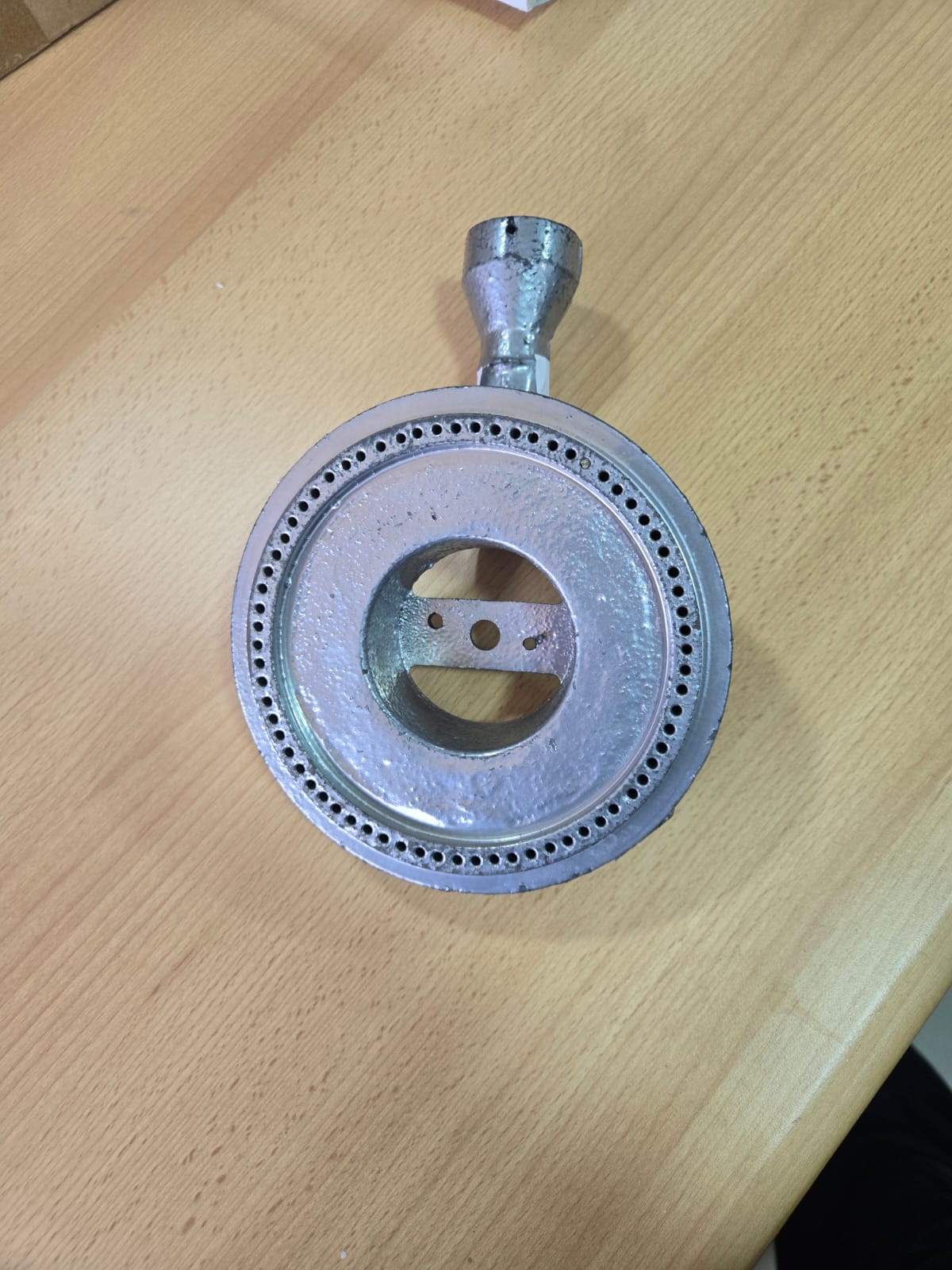
Industrial burners, utilizing fuels such as natural gas or propane, are critical components across hospitals, restaurants, factories, and various commercial facilities. In the United States, these systems have a long-established history of reliable operation.
When it comes to manufacturing, material choice is fundamental. Industrial burners are typically constructed from gray cast iron, specifically ASTM A48 Class 20, 25, or 30. While ductile iron offers higher strength, it is generally unnecessary for burner applications. Gray iron has proven its durability and performance over decades, providing an optimal balance of functionality and cost-effectiveness.
A common consideration is whether to specify a higher grade for increased strength. However, based on extensive production experience, grades above Class 30 (e.g., Class 35) introduce significant challenges in machining, specifically when drilling the precision jet holes. These holes, typically ranging from 0.14" to 0.19" in diameter, are numerous—often numbering in the dozens or even hundreds per burner. The nipples where these holes are located are naturally harder due to their smaller mass. Using higher-grade iron further increases this localized hardness, making drilling more difficult, increasing tool wear, and raising overall machining costs, which constitute a major portion of the burner's production expense.
Recommended Production Process for Quality and Efficiency
To achieve the best balance of surface quality and cost, a hybrid molding approach is recommended:
-
Primary Process: Use green sand molding for the burner's exterior shell combined with resin sand shell molding for the internal cores. This method effectively controls casting costs while ensuring structural integrity.
-
Premium Alternative: For applications where superior surface finish is paramount, hot shell molding for both the shell and core is advised. This results in excellent surface quality but at a higher production cost.
Quality Assurance & Defect Management
Minor casting imperfections such as sand or air holes are permissible within strict limits: a maximum diameter of 2mm and depth of 1mm. It is critical to note that welding repairs on these defects are not allowable. Welding can mask the true depth of imperfections and may create unknown stress points or weaknesses, posing potential safety risks in future operation.
Manufacturing industrial burners requires specialized foundry expertise. Only experienced foundries possess the technical knowledge to optimize the process—balancing material selection, precision machining, and rigorous quality control—to deliver high-performance burners at a competitive cost.
RELATED NEWS
CATEGORIES
LATEST NEWS
CONTACT US
Name: John Yu
Mobile:+86 15941574876
Tel:+86 15941574876
Whatsapp:+86 15941574876
Email:john_yu@metals-casting.com
Add:Wangjiapu Group, Xinan Village, Qianyang Town, Donggang City, Dandong City, Liaoning Province, China.