
Blog
Slag Pot Casting: A Complete Engineering Guide to Large Steel Castings for Steel Mills
Meta Description: A technical guide to slag pot design, materials, and manufacturing for steel mills. Learn about trunnion designs, thermal fatigue resistance, sand casting of 5–50 ton steel pots, heat treatment, CNC machining, and quality assurance — from a leading slag pot foundry.
Every steel mill produces slag — the molten byproduct of ironmaking and steelmaking that carries away impurities from the metal bath. And every slag handling system depends on one workhorse component: the slag pot. Weighing anywhere from 5 to 50 tons, cast in steel, and exposed to molten slag at 1,300–1,600 °C on every cycle, the slag pot is one of the most demanding castings produced anywhere in the world.
Yet despite its critical role, slag pot design and manufacturing are poorly documented in public literature. Most engineering guides cover valves, pumps, and machine components — few address the specialized metallurgy and manufacturing challenges of heavy-section steel castings that operate at the extreme edge of thermal and mechanical loading.
This guide provides a comprehensive engineering overview of slag pot casting: function, design configurations, material selection, the casting and machining process, quality assurance, and service life management.
Part 1: The Slag Pot in Steelmaking Operations
1.1 What Is a Slag Pot?
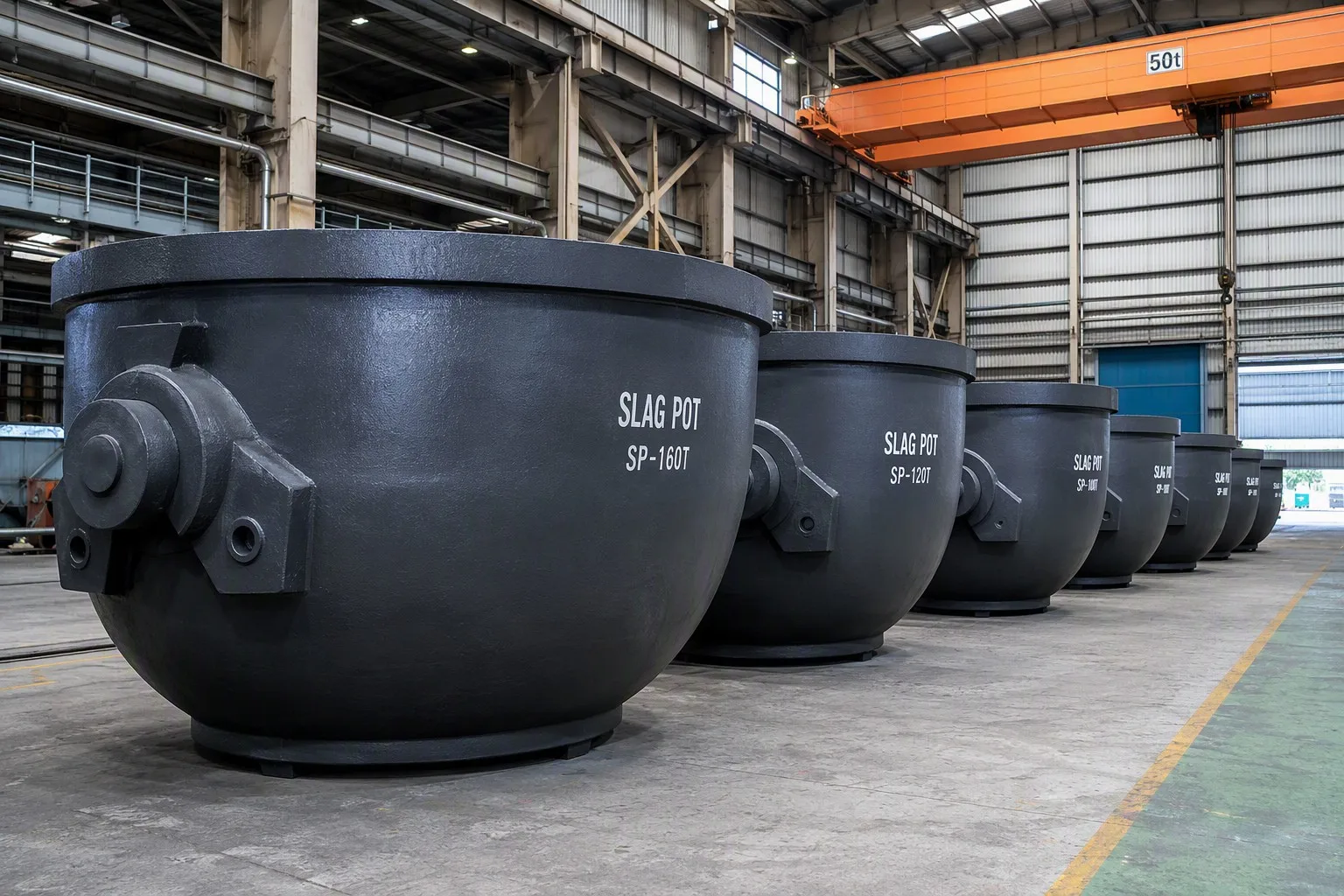
A slag pot (also called a slag ladle, cinder pot, or desulphurization pot depending on the application) is a heavy-walled, bowl-shaped steel casting that collects molten slag discharged from furnaces, converters, and ladle treatment stations.
1.2 Where Slag Pots Are Used
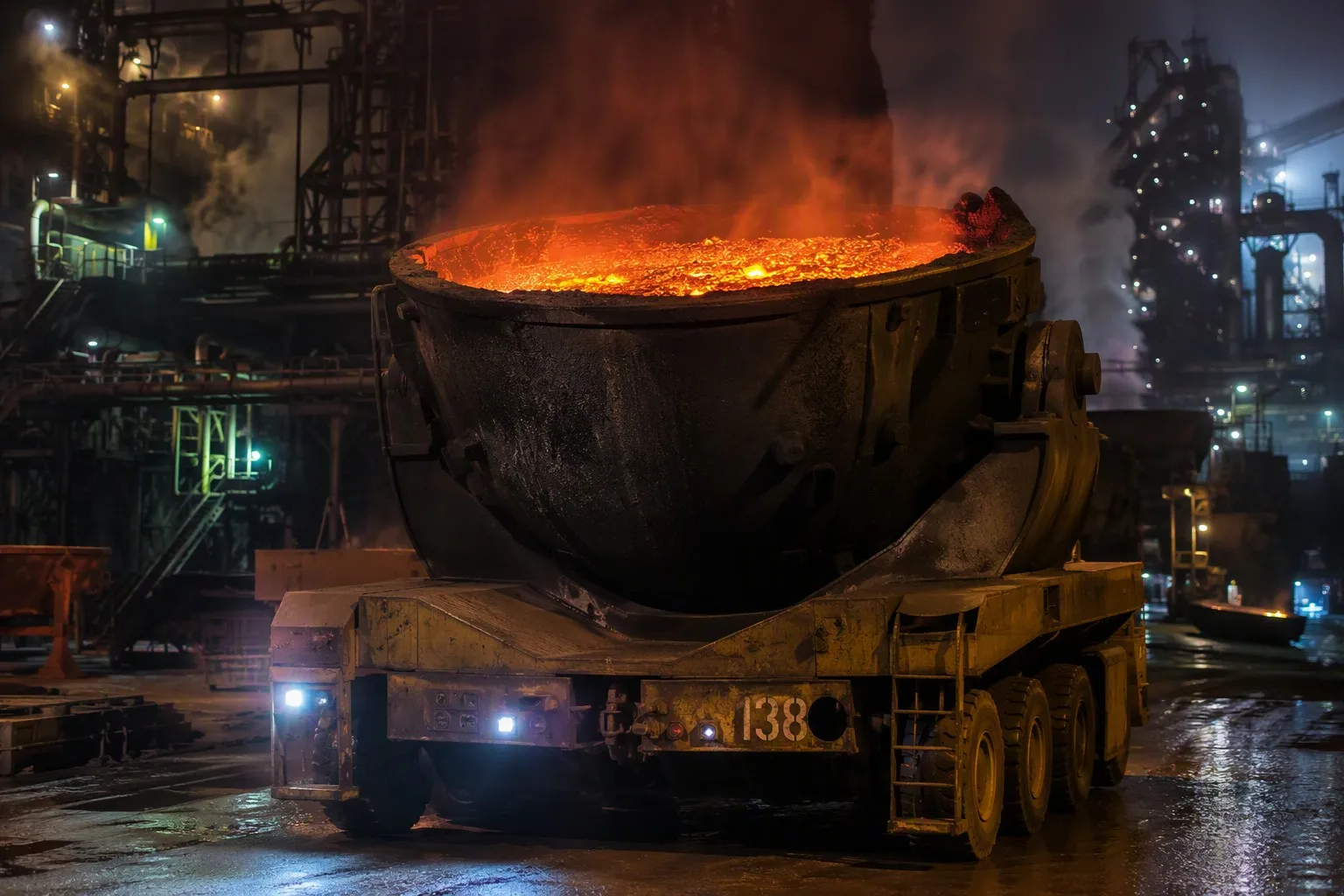
1.3 The Service Cycle
Each slag pot cycle subjects the casting to extreme conditions:
- Filling: Molten slag at 1,300–1,650 °C is poured into the pot. The interior surface experiences instantaneous heating — thermal shock.
- Holding/transport: The filled pot is moved by overhead crane, slag pot carrier, or rail car to the slag processing area. Transport times range from minutes to hours.
- Emptying: The pot is tilted (via trunnions or a tilt mechanism) to discharge the solidified slag. Mechanical shock and thermal gradients occur as the slag releases.
- Cooling: The empty pot cools in air, or is water-sprayed for accelerated cooling. Thermal cycling stresses concentrate at the pot's mouth rim, trunnions, and section transitions.
The pot body undergoes repeated thermal cycling from near-ambient to slag temperature — this is the fundamental design driver for slag pot metallurgy: thermal fatigue resistance.
Part 2: Slag Pot Design Configurations
2.1 Basic Geometry
Slag pot geometry is a balance of functional requirements:
2.2 Trunnion Configurations
The trunnions are the most highly stressed features of a slag pot — they carry the entire pot-plus-slag weight (up to 100+ tons) during lifting and tilting.