
Blog
Precision Investment Casting for Medical Devices & Surgical Implants: ASTM F75 Co-Cr-Mo, HIP Processing, and ISO 13485 Cleanroom Quality
Meta Description: A complete technical guide to precision investment casting for medical devices, orthopedic surgical implants, and surgical instruments. Explore ASTM F75 Cobalt-Chromium-Molybdenum (Co-Cr-Mo), ASTM F136 Ti-6Al-4V ELI, 17-4 PH stainless steel, Hot Isostatic Pressing (HIP per ASTM F1108), 5-axis mirror polishing (Ra <=0.05 µm), and ISO 13485 cleanroom quality compliance.
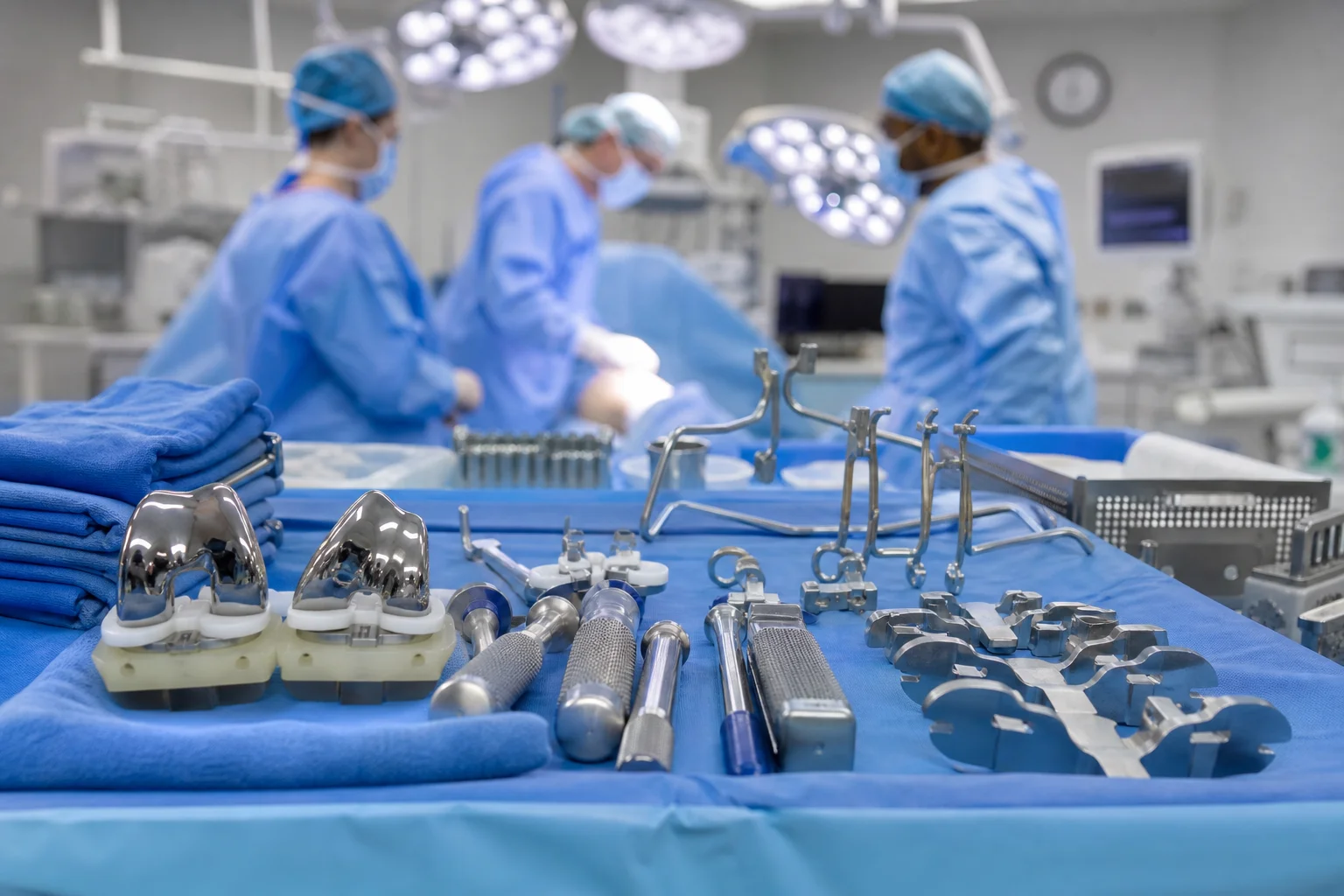
In the global biomedical and medical device industry, surgical instruments, orthopedic joint replacements, spinal fixation devices, and specialized diagnostic housings require the highest metallurgical integrity of any manufactured metal components. Unlike industrial commercial hardware, medical device castings are implanted directly into the human body or utilized in sterile surgical operating theaters:
- Orthopedic Joint Replacements (Knee Femoral Components, Hip Stems, Tibial Trays): Implanted inside human physiological environments for , enduring multi-million-cycle walking fatigue loads (), saline body fluid electrochemical corrosion, and abrasive articulating joint contact.
- Precision Surgical Instruments & Endoscopic End-Effectors: Laparoscopic graspers, bone shears, retractor arms, and robotic surgical wrists require razor-thin wall sections (), razor-sharp cutting edge retention, and resistance to hundreds of autoclaving steam sterilization cycles ( under pressure).
Under these rigorous life-critical conditions, any micro-porosity, non-metallic ceramic inclusion, or heavy metal contamination can lead to in vivo implant fatigue fracture, metal ion cytotoxicity, or surgical tool failure during an operation.
Meeting these life-critical specifications demands specialized biomedical foundry engineering: melting Cobalt-Chromium-Molybdenum (ASTM F75 / ISO 5832-4 Co-Cr-Mo) and Titanium (ASTM F136 / ASTM F1108 Ti-6Al-4V ELI) under high vacuum, deploying high-purity zirconia ceramic shell investment casting molds, executing 100% Hot Isostatic Pressing (HIP: at Argon) to eliminate all internal micro-shrinkage voids, performing multi-axis 5-axis CNC machining, achieving ultra-smooth Mirror Articulating Polish (), and maintaining strict ISO 13485 Quality Management and Cleanroom Packaging Protocols.
This technical engineering guide provides an exhaustive analysis of medical-grade casting metallurgy, ceramic shell mold hygiene, HIP densification physics, precision 5-axis CNC polishing, and biomedical quality validation.
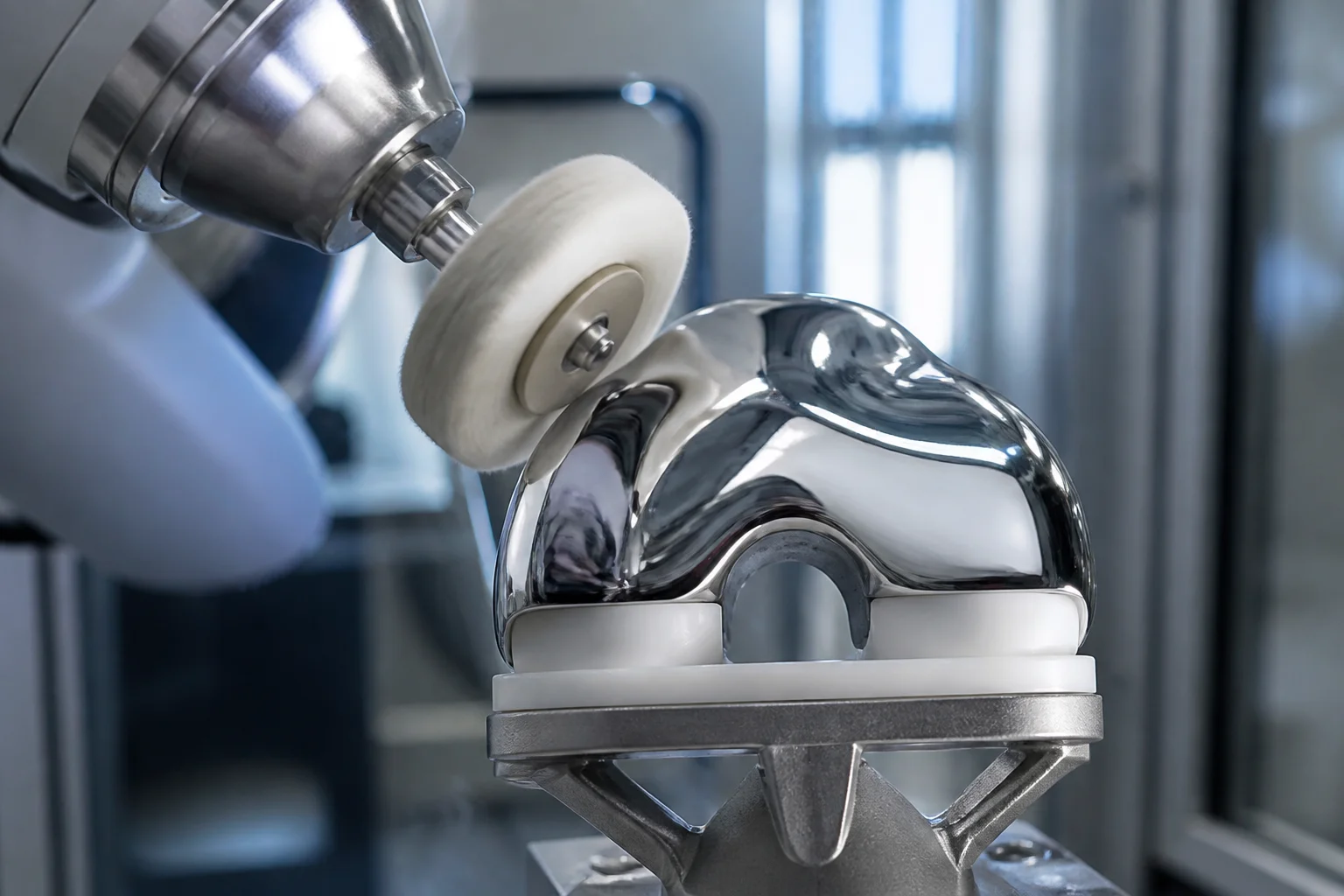
1. Biomedical Operating Environments & Biocompatibility Criteria
 ┌──────────────────────────────────────────────┐
                     │ Human Physiological Environment (37 °C)      │
                     └──────────────────────┬───────────────────────┘
                                            │
        ┌───────────────────────────────────┼───────────────────────────────────┐
        ▼                                   ▼                                   ▼
┌───────────────────────────────┐ ┌───────────────────────────────┐ ┌───────────────────────────────┐
│ High-Cycle Gait Fatigue Load  │ │ Bio-Fluid Saline Corrosion    │ │ Articulating Abrasive Wear    │
│ (2-3 million gait cycles/yr;  │ │ (Extracellular fluid: 0.9%    │ │ (Metal-on-polyethylene joint  │
│ multi-axial walking stress) │ │ NaCl + protein interactions) │ │ friction requiring Ra<0.05µm)│ └───────────────────────────────┘ └───────────────────────────────┘ └───────────────────────────────┘| Medical Device Component | Working Environment & Biomechanical Load | Critical Failure Mode to Prevent | Biomedical Alloy Solution |
|---|---|---|---|
| Orthopedic Knee Femoral Component | High cyclic articulating contact () on UHMWPE insert | Surface galling, abrasive third-body wear, fatigue fracture | Cast Cobalt-Chromium-Molybdenum (ASTM F75 / ISO 5832-4) + HIP |
| Orthopedic Tibial Baseplate Tray | Compressive bone interface load + keel fixation torque | Baseplate bending fatigue, porous coating delamination | ASTM F75 Co-Cr-Mo / Cast Titanium (ASTM F1108 Ti-6Al-4V) |
| Surgical Bone Drills & Forceps | High-torque bone cutting + repeated autoclave steam cycles () | Cutting edge dulling, intergranular pitting corrosion | Martensitic / PH Stainless Steel (ASTM F899 17-4 PH / 420) |
| Robotic Surgical Tool Grippers | Micro-scale articulation ( wall) + high gripping force | Micro-flexural bending fracture, hinge wear | Custom Cast 17-4 PH / ASTM A351 CF3M (Cast 316L) |
2. Biomedical Alloy Metallurgy: Co-Cr-Mo, Titanium, and Surgical Steels
A. Cobalt-Chromium-Molybdenum Alloy (ASTM F75 / ISO 5832-4)
ASTM F75 Co-Cr-Mo is the premier standard for weight-bearing orthopedic joint replacements due to its exceptional wear resistance, corrosion resistance, and high hardness:
- Corrosion Barrier: Chromium () forms an ultra-thin, highly stable, and biologically inert passive layer that prevents release of cobalt ions in saline physiological environments.
- Wear Resistance via Molybdenum: Molybdenum () strengthens the face-centered cubic (FCC) cobalt matrix via solid solution and promotes fine, evenly dispersed intergranular carbides that resist metal-on-polyethylene micro-abrasion.
| Chemical Element | ASTM F75 Standard (wt%) | Pengxin Medical Grade Target | Biocompatibility & Mechanical Function |
|---|---|---|---|
| Chromium (Cr) | Forms passivated film; provides extreme bio-inert corrosion resistance | ||
| Molybdenum (Mo) | Solid solution strengthener; refines grain boundary carbide dispersion | ||
| Nickel (Ni) | (Low-Allergen Target) | Critical: Suppresses nickel-ion allergic tissue reaction in human patients | |
| Iron (Fe) | Eliminates secondary galvanic pitting initiation sites | ||
| Carbon (C) | Optimizes hard carbide volume fraction for articulating wear resistance | ||
| Cobalt (Co) | Balance () | Balance () | High-strength biocompatible matrix with high work-hardening capacity |
B. Surgical Instrument Steels: 17-4 PH & Martensitic 420 (ASTM F899)
- 17-4 PH (ASTM F899 Grade 630): Precipitation-hardened martensitic stainless steel with copper-rich precipitates; delivers high yield strength () and excellent resistance to hospital cleaning chemicals and steam autoclave cycles.
- Martensitic 420 (ASTM F899 Grade 420): High-carbon martensitic steel heat treated to for surgical scalpel handles, bone rongeurs, and osteotomes.
3. High-Purity Ceramic Shell Investment Casting & Wax Tooling
Producing complex organic bone-matching contours with razor-thin walls requires ultra-clean investment casting:
┌─────────────────────────────────────────────────────────────┐
│ 1. High-Precision Multi-Cavity Aluminum Injection Tooling   │
│    • Filled-wax injection with zero cavitation or shrinkage │
├─────────────────────────────────────────────────────────────┤
│ 2. Automated Cleanroom Ceramic Shell Molding (Fused Silica) │
│    • Ultra-pure Zirconia ($ZrO_2$) flour primary face coat  │
│    • Zero silica-metal reaction; zero ceramic inclusions in │
│      implant casting surface                                │
├─────────────────────────────────────────────────────────────┤
│ 3. Vacuum Induction Skull Melting & Pouring (VIM)           │
│    • High-vacuum atmosphere ($10^{-3}\text{ mbar}$); zero dross     │
│    • Directional progressive solidification across implant  │
├─────────────────────────────────────────────────────────────┤
│ 4. Automated Water-Jet Ceramic Shell Removal                │
│    • Non-destructive de-shelling; zero mechanical scratching│
└─────────────────────────────────────────────────────────────┘
4. Hot Isostatic Pressing (HIP per ASTM F1108) & Heat Treatment
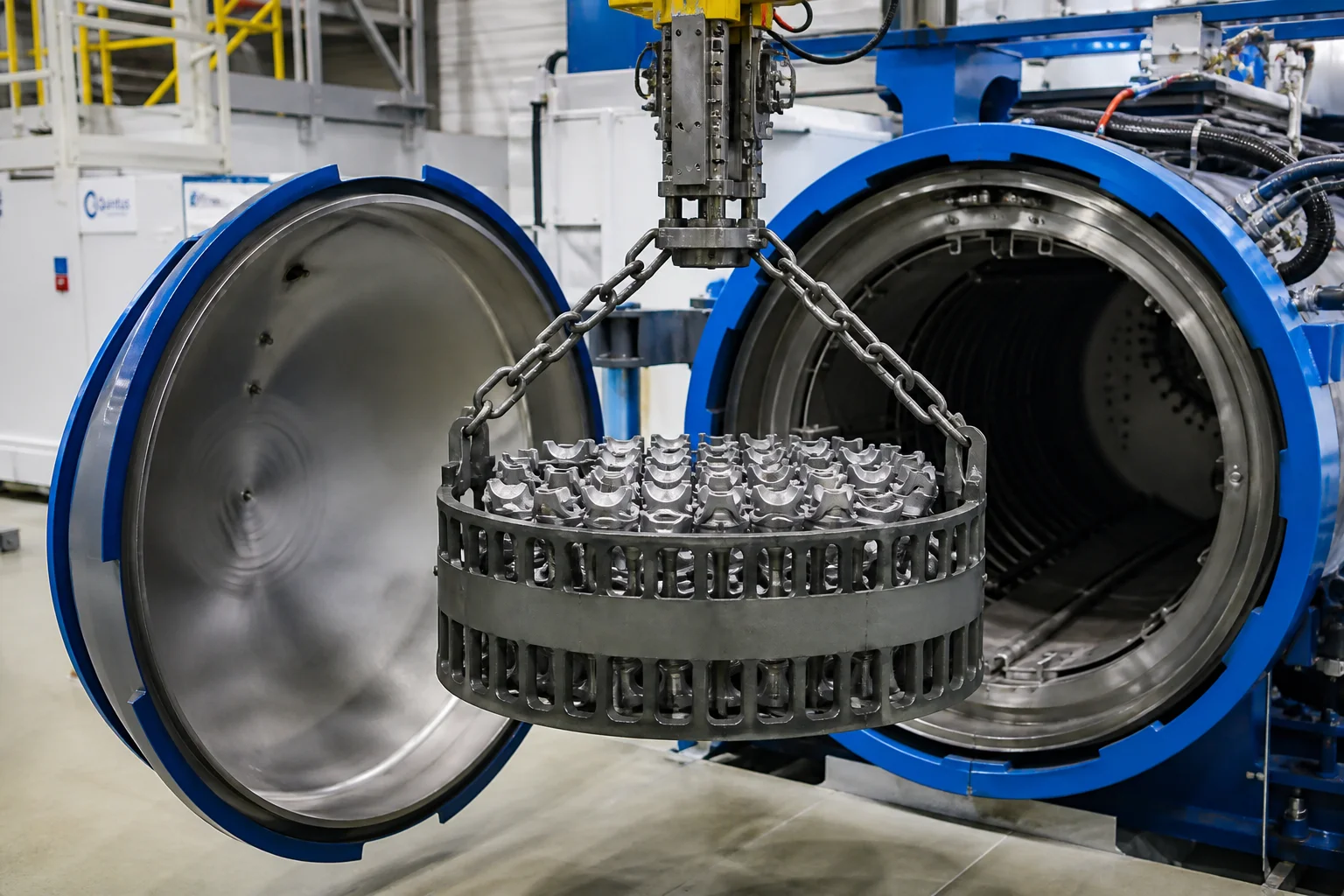
To achieve 100% theoretical density and eliminate internal micro-shrinkage voids that initiate fatigue cracks:
As-Cast Co-Cr-Mo / Ti-6Al-4V Implant Casting
                    │
                    ▼
┌────────────────────────────────────────────────────────┐
│ 1. Hot Isostatic Pressing (HIP) (ASTM F1108 / F75)     │
│    • Temperature: $1,200\text{ °C} \pm 15\text{ °C}$   │
│    • Pressure: $1,000\text{ to } 1,200\text{ bar}$     │
│      (Ultra-Pure High-Pressure Argon Atmosphere)       │
│    • Dwell Time: $4.0\text{ Hours}$                    │
│    • Physics: Internal micro-voids collapse and        │
│      diffusion-bond, achieving 100% full density       │
└───────────────────┬────────────────────────────────────┘
                    │
                    ▼
┌────────────────────────────────────────────────────────┐
│ 2. High-Temperature Homogenizing Solution Treatment    │
│    • $1,220\text{ °C}$ in high vacuum + rapid gas quench│
│    • Dissolves brittle dendritic eutectic carbides     │
│    • Restores high elongation ($\ge 12\%$) and fatigue  │
│      endurance limit ($>450\text{ MPa}$)               │
└────────────────────────────────────────────────────────┘
5. 5-Axis CNC Precision Machining & Mirror-Finish Articulating Polish
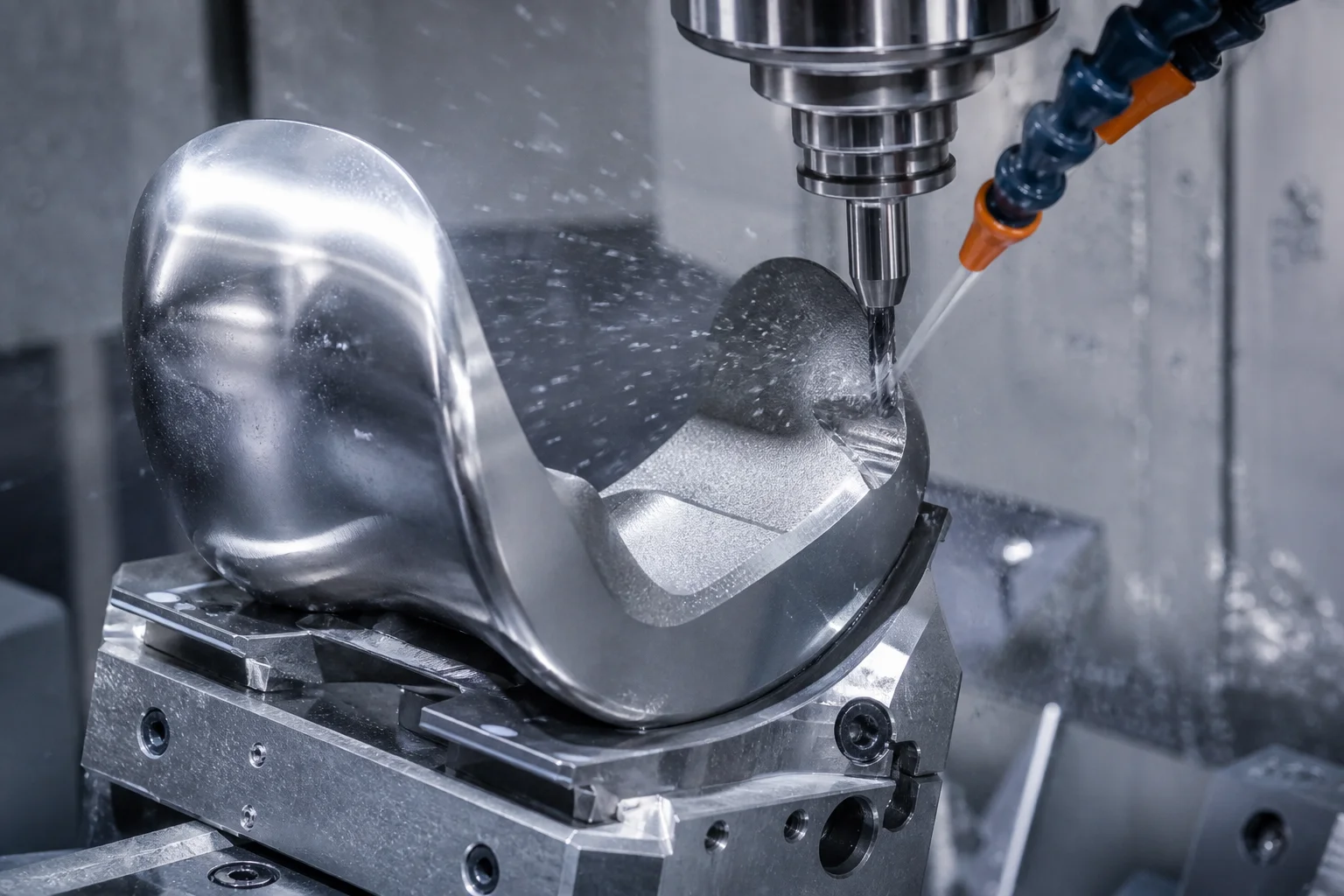
Articulating joint longevity depends strictly on achieving sub-micron surface roughness on contact curves:
 ┌───────────────────────────────────────────────────────┐
        │ 1. 5-Axis High-Speed CNC Contour Milling             │
        │ • Precision machining of bone-fixation interfaces     │
        │ • Profile tolerance held within $\pm 0.020\text{ mm}$ │
        └──────────────────────────┬────────────────────────────┘
                                   │
                                   ▼
        ┌───────────────────────────────────────────────────────┐
        │ 2. Multi-Stage Automated Robotic Buffing & Lapping    │
        │ • Diamond abrasive compound paste polishing           │
        │ • Eliminates all CNC cutter tool marks                │
        └──────────────────────────┬────────────────────────────┘
                                   │
                                   ▼
        ┌───────────────────────────────────────────────────────┐
        │ 3. Cleanroom Mirror Articulating Surface Finishing    │
        │ • Final surface roughness: $Ra \le 0.03\text{ to } 0.05\text{ µm}$│
        │ • Non-contact 3D optical profilometer validation      │
        └───────────────────────────────────────────────────────┘
6. Biomedical Quality Assurance Standards (ISO 13485 & ASTM)
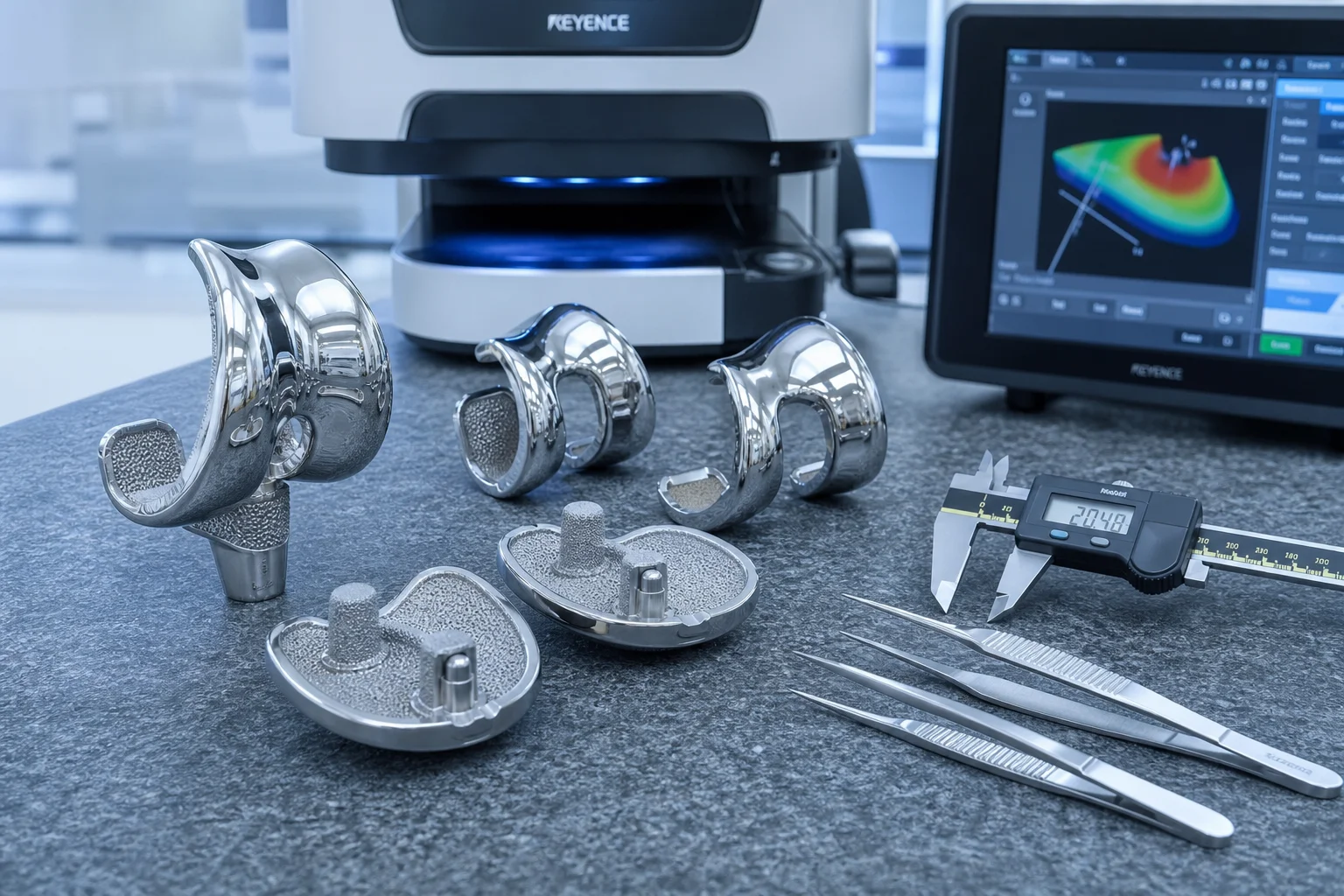
| Quality Inspection Category | Standard / Test Specification | Acceptance Criteria |
|---|---|---|
| Fluorescent Penetrant Testing (PT) | ASTM E1417 / ISO 3452 Level 4 | 100% inspection of articulating surfaces and fixing lugs; Zero Linear Indications |
| Digital Micro-Focus X-Ray (RT) | ASTM E192 / ASTM E1030 | 100% radiographic scan; Grade 1 zero internal shrinkage voids post-HIP |
| Surface Roughness Profilometry | ISO 4287 / Non-Contact Optical Profilometer | Articulating condyle surfaces: |
| 3D Coordinate Optical Scan | 3D Laser / Optical Blue Light (GOM ATOS) | 100% 3D color-map inspection against CAD master model () |
| Biocompatibility & Cleanliness | ISO 10993 (Cytotoxicity, Hemocompatibility) | Validated bio-inert; bio-burden and particulate testing per cleanroom standards |
7. Medical Device Casting at Dandong City Pengxin Machinery Co., Ltd.
Manufacturing high-precision medical device and surgical implant castings demands high-purity vacuum melting, cleanroom investment casting, 5-axis CNC machining, and rigorous quality systems.
Dandong City Pengxin Machinery Co., Ltd. delivers fully certified, precision-finished medical device and surgical instrument castings:
- Biomedical Alloy Metallurgy: Certified vacuum casting of ASTM F75 Co-Cr-Mo, ASTM F136 Ti-6Al-4V ELI, and surgical-grade 17-4 PH and 420 stainless steels.
- Zero-Inclusion Ceramic Shelling: Dedicated high-purity zirconia slurry dipping lines producing clean, near-net-shape castings with pristine surface fidelity.
- HIP Processing Integration: 100% Hot Isostatic Pressing post-casting to guarantee 100% theoretical internal density and superior high-cycle fatigue resistance.
- 5-Axis CNC Machining & Ultra-Smooth Mirror Polishing: Climate-controlled 5-axis machining bays and robotic polishing delivering articulating surfaces down to .
- Comprehensive Quality & Traceability: ISO 9001 certified with ISO 13485 quality compliance framework, providing full EN 10204 3.1 material test certificates, Level 4 PT/RT reports, and optical profilometer scans.
Conclusion
Precision investment casting for medical devices and surgical implants operates at the pinnacle of metallurgical cleanliness, structural fatigue endurance, and human biocompatibility. Meeting stringent ASTM and ISO 13485 standards demands ultra-clean vacuum melting (ASTM F75 Co-Cr-Mo), high-purity zirconia ceramic shelling, 100% Hot Isostatic Pressing (HIP), 5-axis precision CNC contouring, and mirror articulating polishing ().
Partnering with an experienced, integrated precision investment casting and machining powerhouse ensures that your medical implants and surgical tools deliver flawless surgical performance, superior fatigue longevity, and decades of reliable biocompatibility.
Contact Dandong City Pengxin Machinery Co., Ltd. to submit your medical device or surgical instrument drawings.
Dandong City Pengxin Machinery Co., Ltd. — Heavy Castings and Precision Machining, Since 1958.
RELATED NEWS
- The Current Situation and Development of China's Cast Iron Valve Products
- Ductile Iron Trench Grates: The Ultimate Solution for Heavy-Duty Drainage
- Shell Molding Casting Process in China
- Design for Manufacturability in Metal Casting: How to Optimize Part Design for C
- Floor Molding from Dandong Pengxin Machinery
CATEGORIES
LATEST NEWS
CONTACT US
Name: John Yu
Mobile:+86 15941574876
Tel:+86 15941574876
Whatsapp:+86 15941574876
Email:john_yu@metals-casting.com
Add:Wangjiapu Group, Xinan Village, Qianyang Town, Donggang City, Dandong City, Liaoning Province, China.