
Blog
Tool-less Rapid Prototyping in Metal Casting: 3D Sand Printing (Binder Jetting) & 3D Wax Investment Casting vs. Hard Tooling
Meta Description: A comprehensive engineering guide to tool-less rapid prototyping in metal casting. Explore Binder Jetting 3D sand printing for complex cores, SLA/DLP 3D printed sacrificial wax patterns for investment casting, lead time compression from 12 weeks to 5 days, ISO 8062-3 (DCTG 4–6) tolerances, and cost crossover economics.
In modern mechanical product development, industrial engineering teams face relentless pressure to accelerate development cycles and reduce time-to-market. Traditional metal casting development workflows are bottlenecked by Hard Pattern & Corebox Tooling Fabrication:
- Machining precision aluminum or steel core boxes, matchplates, and investment casting wax injection dies requires of CNC toolroom lead time.
- Tooling investment for complex prototypes (such as engine blocks, hydraulic manifolds, or pump volutes) costs \15,000\text{ to } $80,000+$ upfront.
- If initial prototype testing reveals necessary design modifications (such as rib thickening, gating redesign, or port relocation), the expensive hard tooling must be scrapped or heavily modified with welded inserts, resetting lead times by another month.
The emergence of Additive Manufacturing (AM) in Foundry Engineering has shattered these traditional constraints through Tool-less Rapid Prototyping:
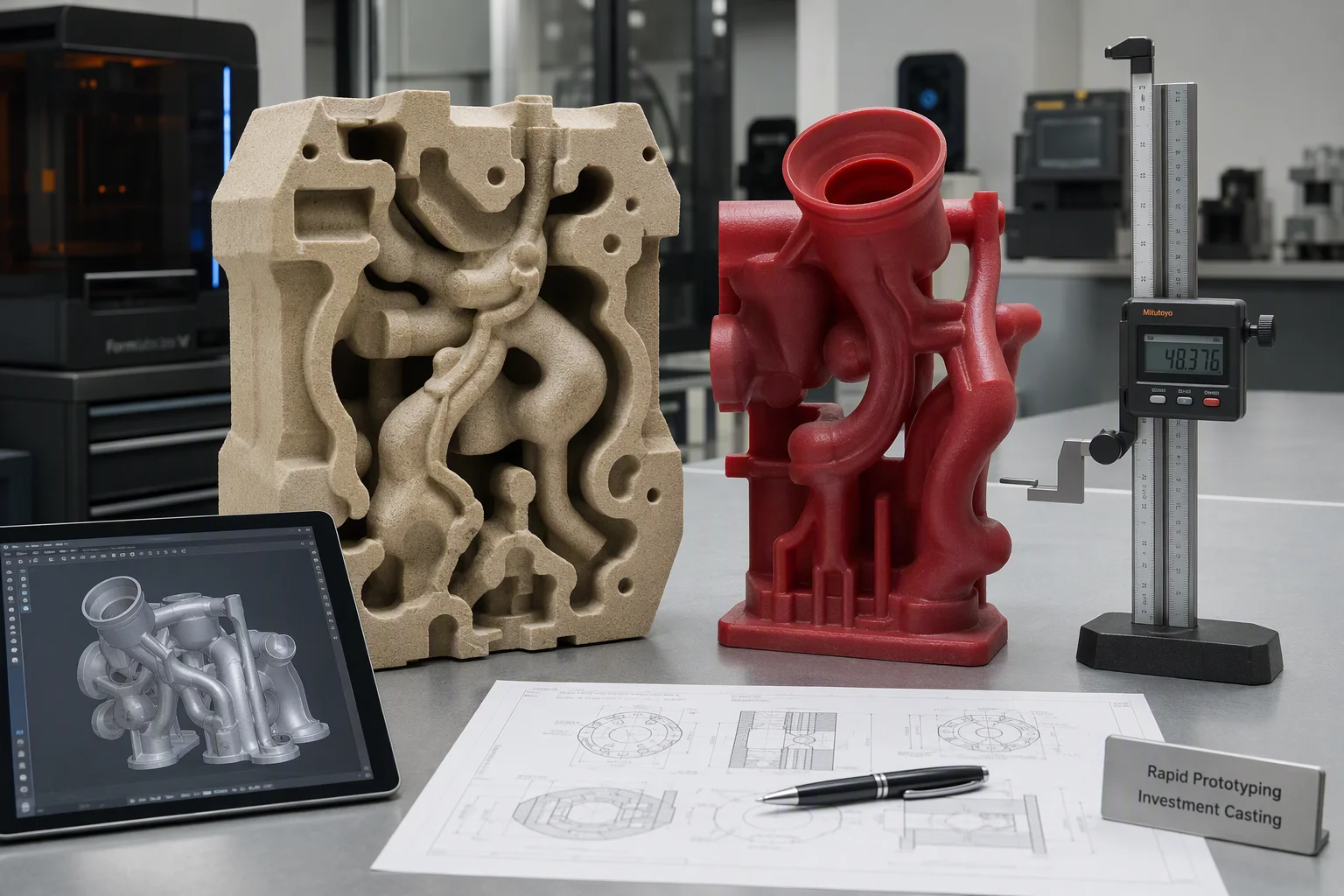
- Industrial Binder Jetting (3D Sand Printing): High-speed inkjet printheads selectively deposit liquid furan or inorganic binders onto fine silica or ceramic sand beds, building complex, monolithic sand molds and internal cores directly from 3D CAD data in hours—without patterns or coreboxes.
- High-Resolution SLA / DLP 3D Printed Wax Patterns: Additive stereolithography builds sacrificial, clean-burning polymer/wax patterns for precision lost-wax investment casting, delivering complex organic investment castings in days.
This hybrid approach compresses prototype casting lead times from 12 weeks down to 5–7 days, allows radical Topology Optimization and Conformal Cooling Passages with zero draft angles, and ensures fast pilot-batch validation before committing to mass production tooling.
This engineering guide provides an exhaustive technical analysis of 3D sand printing physics, 3D wax investment casting workflows, dimensional accuracy standards (ISO 8062-3), and economic cost crossover curves.
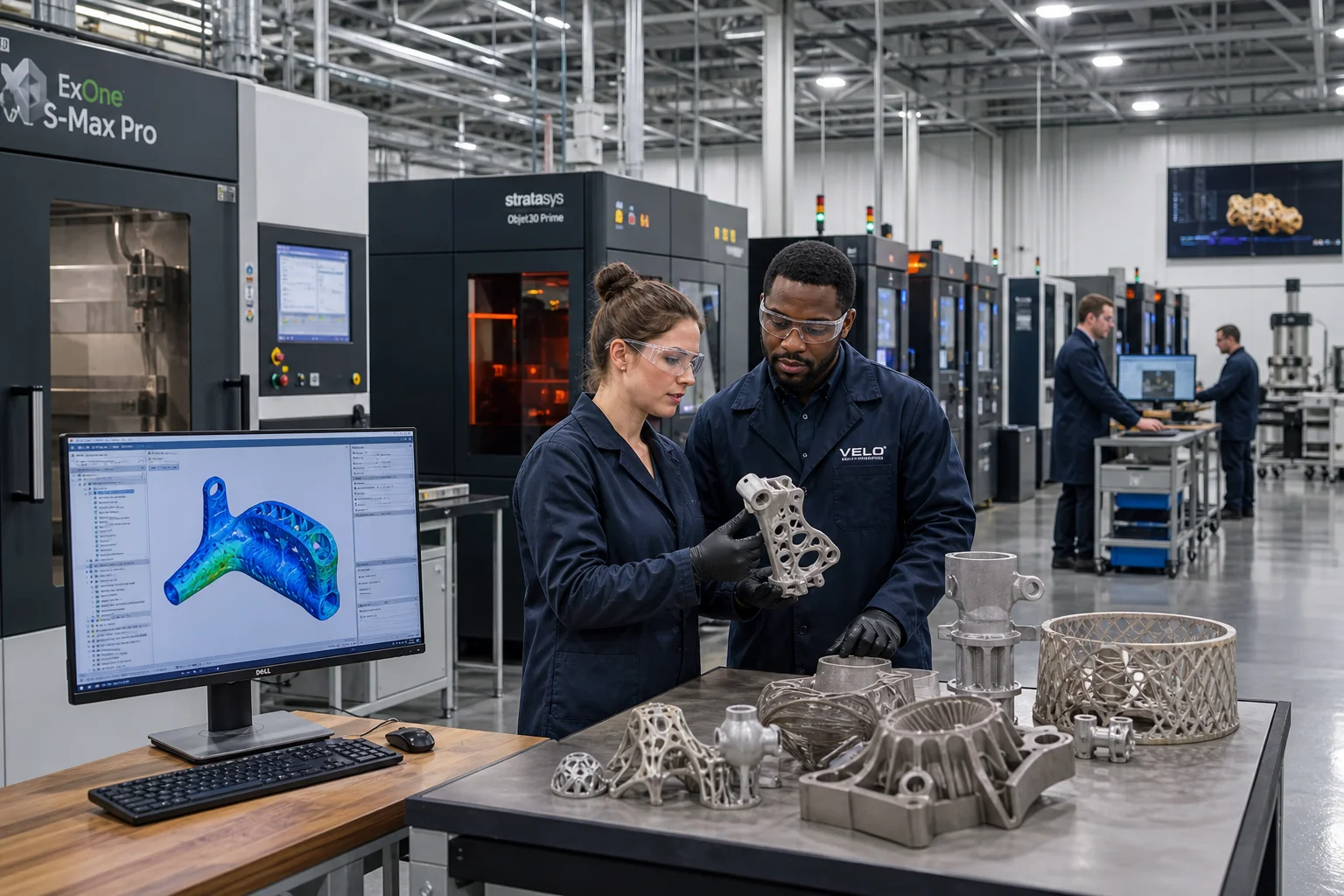
1. Comparing Prototyping Methods: 3D Sand vs. 3D Wax vs. Hard Tooling
 ┌──────────────────────────────────────────────┐
                     │ 3D CAD Master Model (STEP / Parasolid)       │
                     └──────────────────────┬───────────────────────┘
                                            │
        ┌───────────────────────────────────┼───────────────────────────────────┐
        ▼                                   ▼                                   ▼
┌───────────────────────────────┐ ┌───────────────────────────────┐ ┌───────────────────────────────┐
│ Binder Jetting 3D Sand Molds  │ │ 3D Printed Wax / Resin Pattern│ │ Traditional CNC Machined Tool │
│ • Zero pattern tooling        │ │ • Direct shell ceramic dip    │ │ • 8-12 weeks CNC die machining│
│ • Lead time: 3 to 5 days      │ │ • Lead time: 5 to 7 days      │ │ • High upfront CAPEX cost     │
│ • Ideal for 1-50 heavy parts  │ │ • Ideal for precision smalls  │ │ • Ideal for >500 mass prod    │
└───────────────────────────────┘ └───────────────────────────────┘ └───────────────────────────────┘| Manufacturing Parameter | Binder Jetting 3D Sand Printing | 3D Printed Wax Investment Casting | Traditional CNC Hard Tooling |
|---|---|---|---|
| Upfront Tooling Cost | \0\text{ (Zero Tooling)}$ | \0\text{ (Zero Tooling)}$ | \15,000 – $80,000+$ |
| First Article Delivery Lead Time | |||
| Geometric Freedom | Complete (Negative draft angles, undercut cavities, integrated cores) | Complete (Complex internal channels, lattice voids) | Restricted (Requires split lines, draft angles , core pulls) |
| Dimensional Tolerance | ISO 8062-3 DCTG 6 – 8 () | ISO 8062-3 DCTG 4 – 6 () | ISO 8062-3 DCTG 4 – 8 |
| Surface Roughness () | |||
| Economic Batch Volume |
2. Binder Jetting 3D Sand Printing: Process Physics & Sand Metallurgy
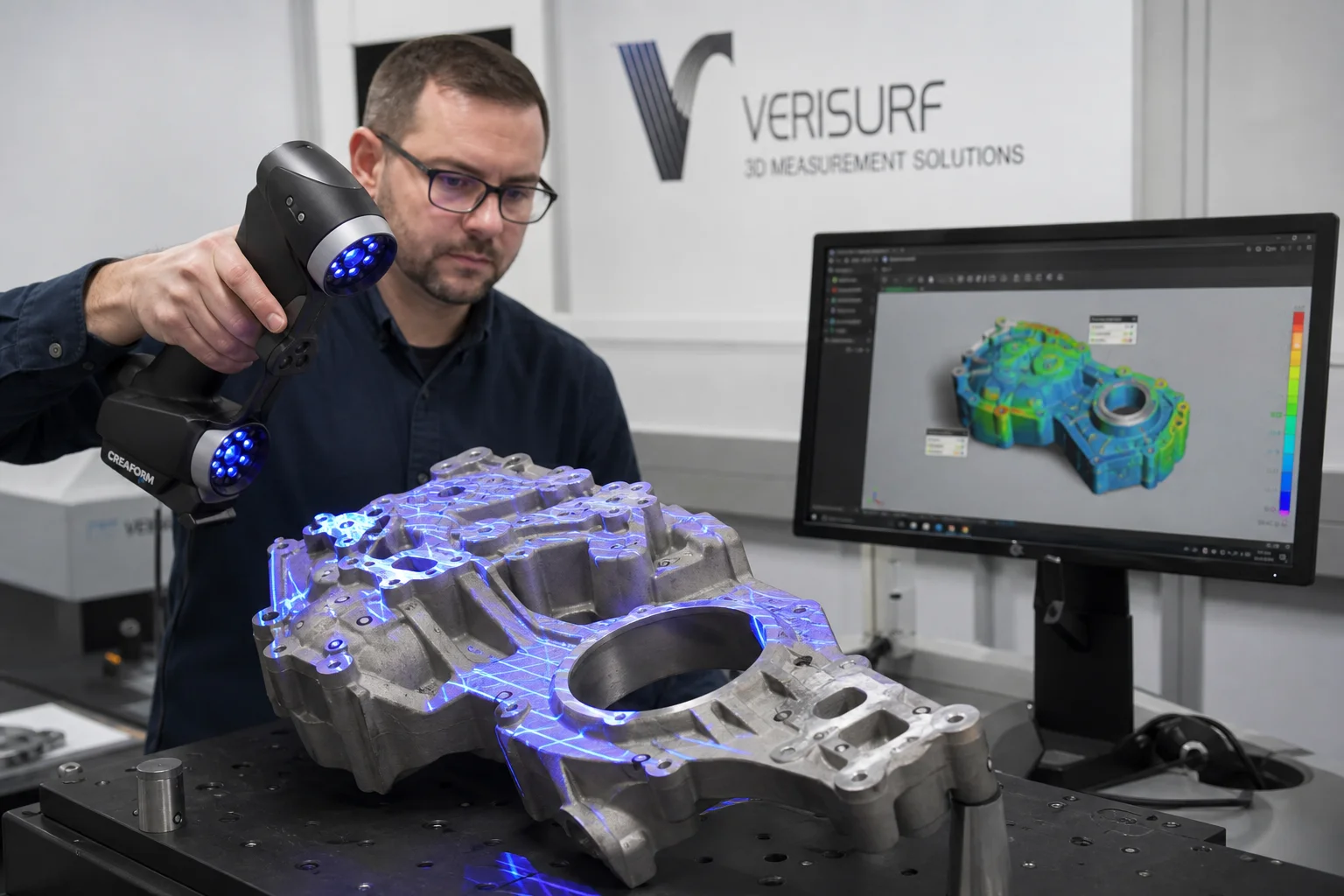
Industrial Binder Jetting (BJ) printers deposit micro-droplets of chemical binder (such as furan, phenolic, or eco-friendly inorganic silicate) onto recoated sand layers:
┌─────────────────────────────────────────────────────────────┐
│ 1. Sand Bed Spreading & Leveling                            │
│    • High-purity silica or synthetic spherical ceramic sand │
│      (AFS 55 – 65) spread in $200 – 300\text{ µm}$ layers   │
├─────────────────────────────────────────────────────────────┤
│ 2. High-Resolution Piezoelectric Inkjet Printing            │
│    • Drop-on-Demand (DoD) printhead selectively deposits    │
│      furan/phenolic binder at $600\text{ DPI}$ resolution   │
├─────────────────────────────────────────────────────────────┤
│ 3. Infrared Radiation In-Situ Curing                        │
│    • IR lamp passes over sand bed, activating cross-linking │
│      polymerization of binder resin ($1.5 – 2.0\%\text{ wt}$)│
├─────────────────────────────────────────────────────────────┤
│ 4. Unpacking & Sand De-Powdering                            │
│    • Job box removed; unbound loose sand vacuumed and       │
│      recycled ($100\%$ sand reuse rate); core ready for wash │
└─────────────────────────────────────────────────────────────┘
Key Sand Strength & Gas Permeability Parameters:
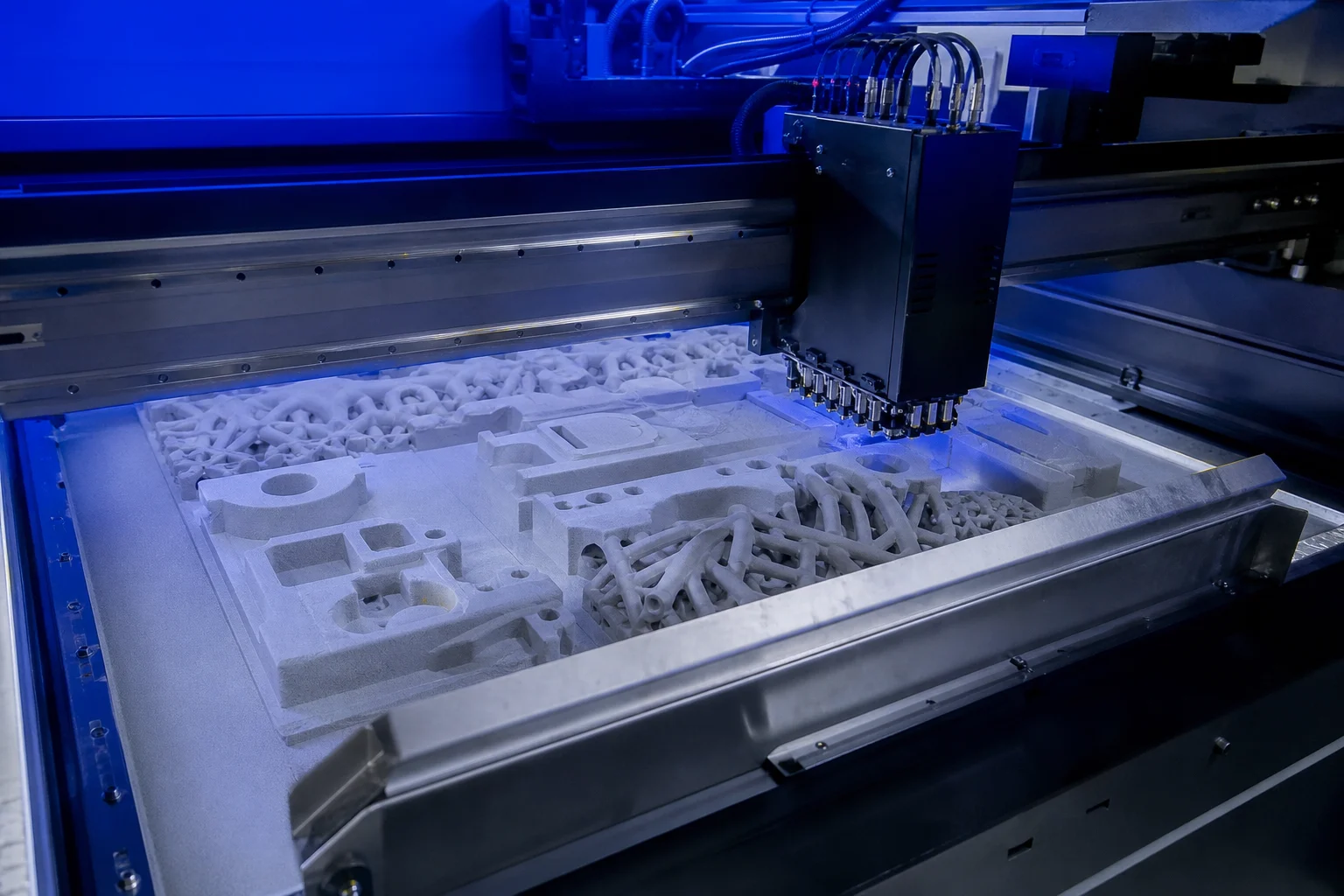
- Bending Strength: Cured 3D printed sand delivers bending strengths of , withstanding molten steel ferrostatic pressures up to .
- High Gas Permeability: Spherical ceramic sand grains provide superior gas permeability (), allowing rapid evacuation of core gases and completely preventing blowhole defects.
3. SLA / DLP 3D Printed Wax Patterns for Precision Investment Casting
Where razor-sharp surface fidelity () or thin wall sections () are required:
 ┌───────────────────────────────────────────────────────┐
        │ 1. High-Resolution SLA / DLP 3D Pattern Printing      │
        │ • Photopolymer casting wax/resin printed at 25 µm     │
        │   layer thickness; zero ash content ($<0.02\%$)       │
        └──────────────────────────┬────────────────────────────┘
                                   │
                                   ▼
        ┌───────────────────────────────────────────────────────┐
        │ 2. Automated Multi-Layer Ceramic Shell Dipping        │
        │ • Standard refractory slurry + zircon flour coating   │
        │ • Shell builds $6 – 8\text{ mm}$ thickness            │
        └──────────────────────────┬────────────────────────────┘
                                   │
                                   ▼
        ┌───────────────────────────────────────────────────────┐
        │ 3. Autoclave Flash Dewaxing & High-Temp Firing        │
        │ • Flash burn-out ($1,050\text{ °C}$); zero residue ash│
        │ • Molten metal poured under protective atmosphere     │
        └───────────────────────────────────────────────────────┘
4. Design Freedom: Topology Optimization & Integrated Monolithic Cores
Because 3D sand printing eliminates the physical necessity of extracting a rigid pattern from sand, mechanical designers can execute radical geometric optimizations:
Traditional Assembly (6 Castings + 12 Fasteners)
                   │
                   ▼  3D Sand Printing Redesign
Monolithic Topology-Optimized Casting (1 Integrated Component)
Key Engineering Advantages:
- Integrated Internal Core Assemblies: Consolidates 10+ individual corebox cores into a single monolithic 3D printed core, completely eliminating core shifting, parting line flash, and assembly tolerance stack-ups.
- Conformal Cooling & Hydraulic Flow Channels: Smooth, organic, non-linear fluid channels that follow ideal CFD flow streamlines, reducing pressure drop by up to .
- Weight Reduction: Removing unnecessary non-structural wall sections reduces casting net weight by while increasing stiffness.
5. Economic Cost Crossover Curve: Prototyping vs. Hard Tooling
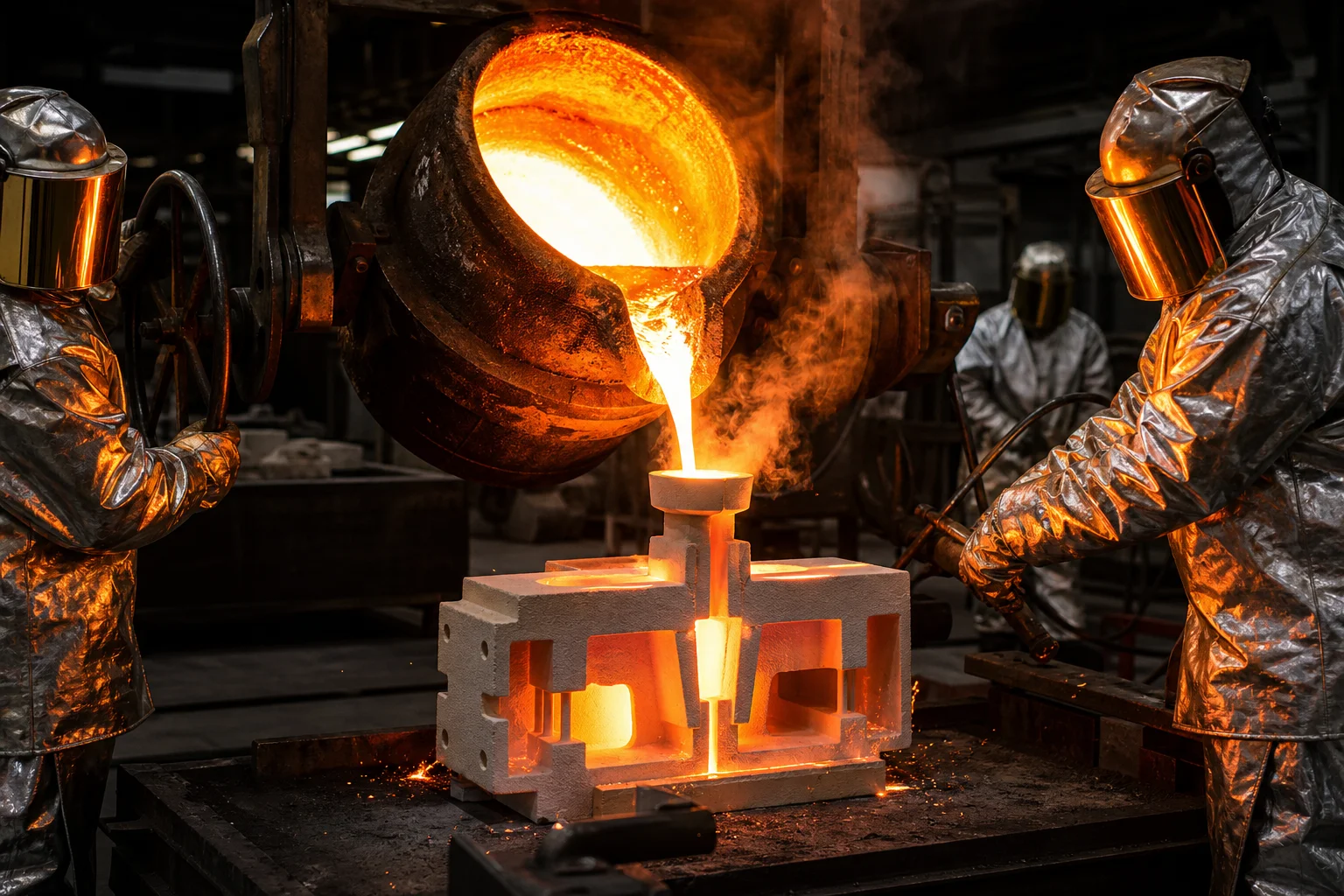
Cost ($)
  ▲
  │                                    / Traditional Hard Tooling
  │                                   /  (Low Unit Cost + High Tooling)
  │                                  /
  │                                 /
  │                                /
  │      Tool-less 3D Sand Printing
  │      (Zero Tooling + Linear Unit Cost)
  │    /
  │   /  ◄── Crossover Point (~150 to 300 pieces)
  │  /
  │ /
└─────────────────────────────────────────────────────► Batch Volume (Qty)- For 1 to 50 Pieces (R&D Prototypes & Pilot Runs): Tool-less 3D sand/wax printing is cheaper overall due to zero pattern CAPEX and zero storage maintenance.
- For 50 to 300 Pieces (Pre-Series Production): Hybrid manufacturing (3D printed complex cores inside standard reusable box frames) provides the optimal balance of speed and cost.
- For Pieces (Serial Mass Production): Traditional high-durability CNC aluminum/steel matchplates become more economical on a per-unit basis.
6. Rapid Prototyping Capabilities at Dandong City Pengxin Machinery Co., Ltd.
Bridging the gap between initial digital design concepts and certified production metal castings requires industrial 3D additive manufacturing equipment, rapid metallurgical pouring bays, 5-axis CNC machining, and 3D optical scanning validation.
Dandong City Pengxin Machinery Co., Ltd. delivers fully certified, turnkey rapid prototype metal castings in 5 to 7 days:
- Industrial Binder Jetting 3D Sand Printing: High-resolution sand printers with build envelopes up to , capable of building monolithic molds and cores for castings up to 10 tons.
- High-Precision 3D Printed Wax Investment Casting: Direct printing of complex photopolymer sacrificial patterns for stainless steel, alloy steel, and non-ferrous prototypes.
- Full Metallurgical Spectrum: Rapid induction melting of all standard and specialty alloys: Carbon Steels, Stainless Steels (304, 316, Duplex 2205), High-Nickel Alloys, and Ductile Irons.
- In-House 5-Axis CNC Machining: Climate-controlled machining centers delivering rapid prototype finish machining within 48 hours of casting shakeout.
- 3D Optical Laser Scanning Verification: Complete 3D CAD-to-part color-map dimensional deviation reports (ISO 8062-3) and full EN 10204 3.1 material test certificates.
Conclusion
Tool-less rapid prototyping represents a revolutionary paradigm shift in modern casting engineering. By eliminating the multi-week delay and tens of thousands of dollars associated with hard pattern tooling, industrial Binder Jetting 3D sand printing and 3D wax investment casting enable design engineers to iterate faster, manufacture previously impossible topology-optimized geometries, and transition from CAD design to real, fully functional metal castings in just 5 to 7 days.
Partnering with an experienced, integrated additive manufacturing and precision casting powerhouse ensures that your R&D projects cross the finish line faster, with lower risk, and with superior product performance.
Contact Dandong City Pengxin Machinery Co., Ltd. to submit your 3D CAD files for rapid prototype casting.
Dandong City Pengxin Machinery Co., Ltd. — Heavy Castings and Precision Machining, Since 1958.
CATEGORIES
LATEST NEWS
CONTACT US
Name: John Yu
Mobile:+86 15941574876
Tel:+86 15941574876
Whatsapp:+86 15941574876
Email:john_yu@metals-casting.com
Add:Wangjiapu Group, Xinan Village, Qianyang Town, Donggang City, Dandong City, Liaoning Province, China.