
Blog
Pattern Making and Tooling for Sand Casting: The Foundation of Casting Quality
Meta Description: A technical guide to pattern making and tooling for sand casting. Learn pattern materials, pattern types, shrinkage allowances, draft angles, core boxes, pattern inspection, and maintenance — the tools that determine casting quality.
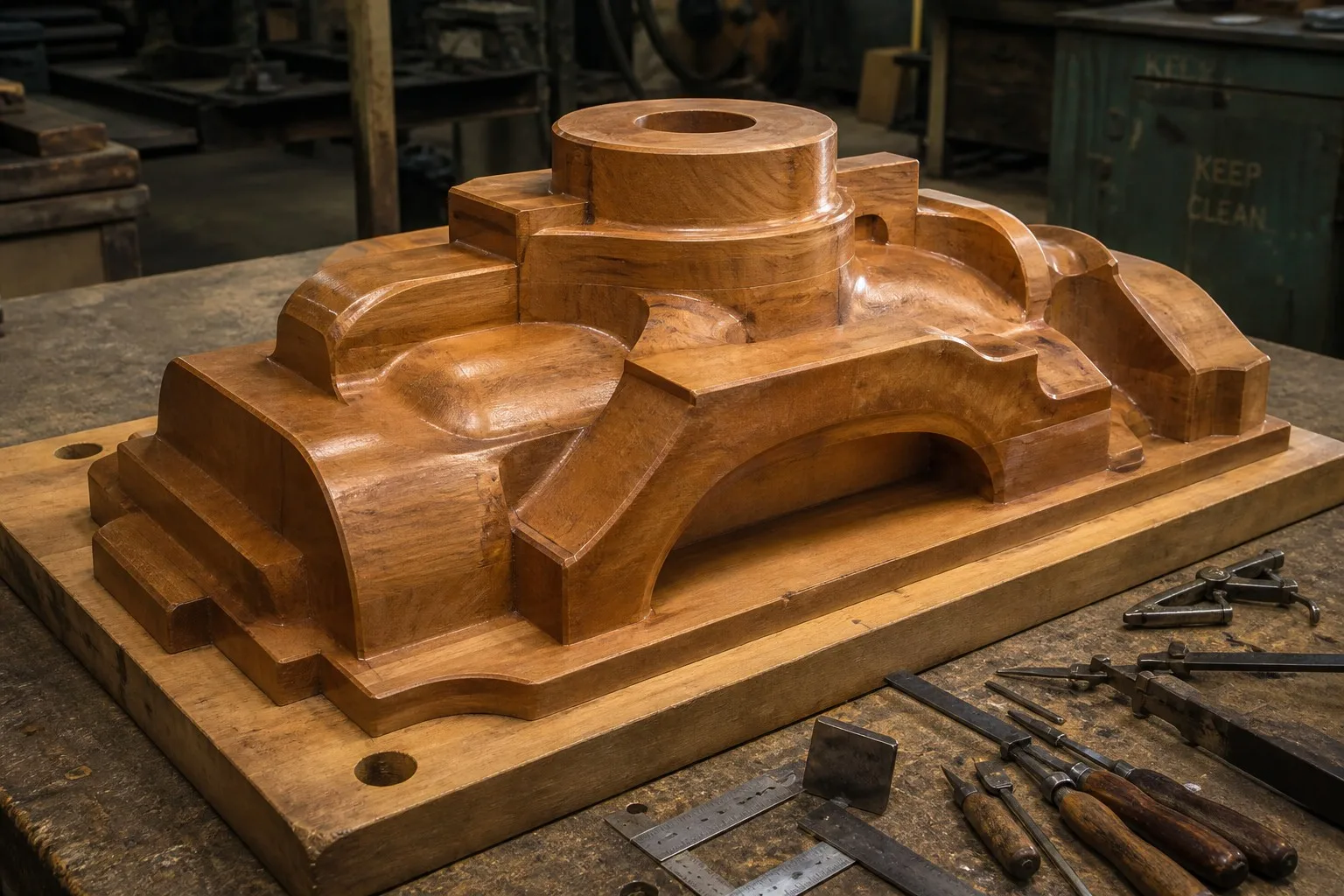
Every sand casting begins as a pattern. The pattern shapes the mold cavity, and the mold cavity shapes the casting. It follows that the quality of the casting can never exceed the quality of the pattern — a worn, distorted, or poorly designed pattern guarantees defective castings no matter how good the melting, molding, or pouring is.
Pattern making is a precision engineering discipline in its own right. This guide covers pattern materials, types, allowances, core tooling, inspection, and maintenance — the complete lifecycle of foundry tooling.
1. The Role of the Pattern
The pattern is a full-size replica of the casting (plus allowances) used to form the mold cavity:
| Function | Detail |
|---|---|
| Forms mold cavity | Pattern shape + allowances = cavity shape |
| Locates cores | Core prints hold cores in position |
| Defines parting line | Determines mold opening, draft, and flash location |
| Sets gating location | Runner and riser positions marked or attached |
| Determines surface quality | Pattern surface texture transfers to the casting |
2. Pattern Materials
| Material | Life (molds) | Cost | Best Use |
|---|---|---|---|
| Wood (pine, mahogany, plywood) | 100-1,000 | Low | Prototypes, low-volume, large patterns |
| Resin / plastic | 1,000-10,000 | Moderate | Medium volume, complex shapes |
| Aluminum alloy | 10,000-100,000+ | Moderate-high | Production patterns, match plates |
| Cast iron / steel | 100,000+ | High | High-volume production, wear-prone areas |
| CNC-machined polymer | 1,000-5,000 | Moderate | Quick production tooling |
Material Selection Logic
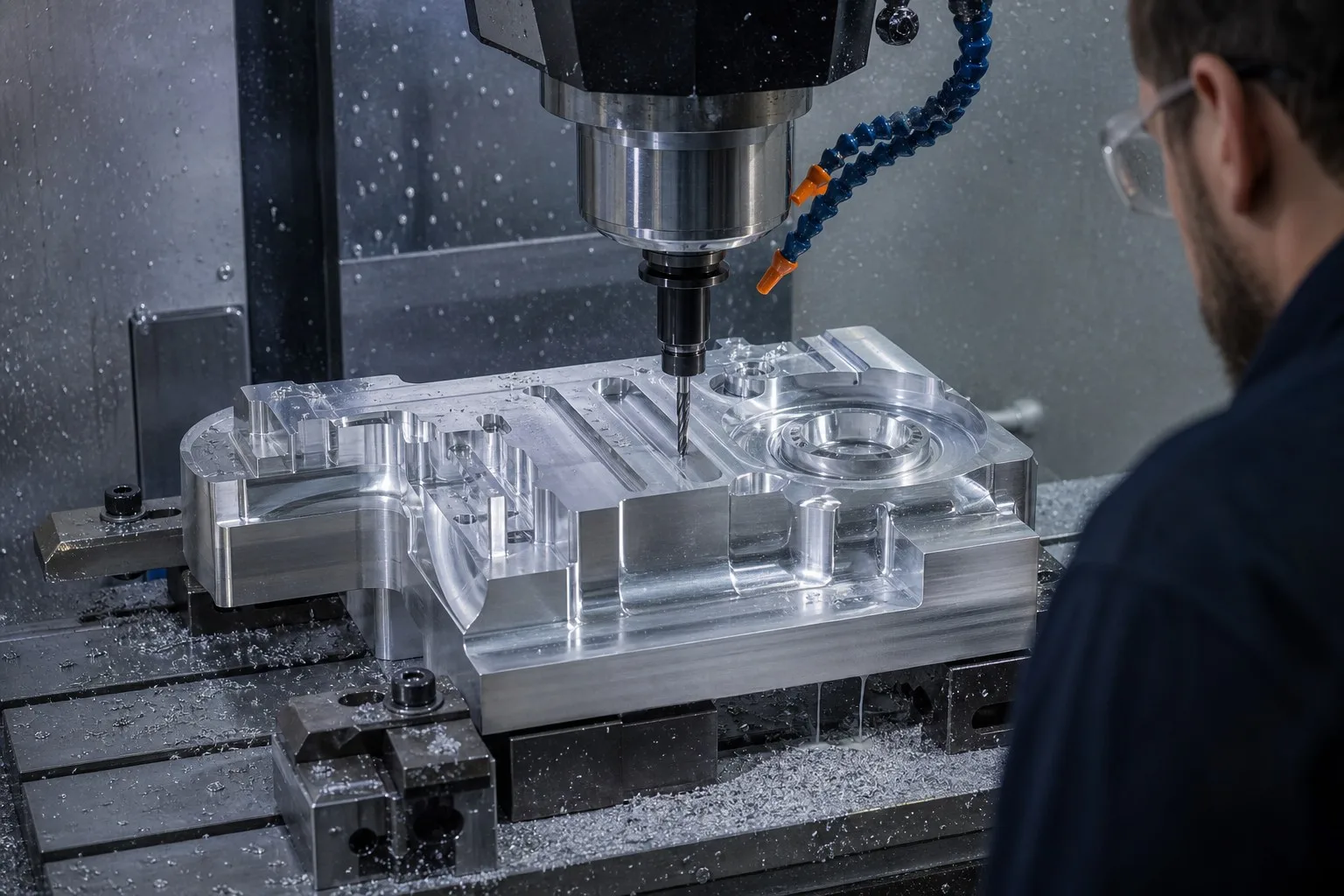
- Wood: fast and cheap, but dimensionally unstable (moisture absorption) — limited to prototypes and very large low-volume patterns
- Resin/plastic: stable, machinable, good for medium volumes and complex shapes
- Aluminum: the production standard — light, stable, machinable, corrosion resistant
- Cast iron: for extremely high volume or where patterns are repeatedly handled
3. Pattern Types
| Type | Description | Application |
|---|---|---|
| Loose pattern | Single piece, removed from mold manually | Very large or low-volume castings |
| Match plate pattern | Cope and drag halves mounted on a plate | Medium-high volume, machine molding |
| Cope and drag patterns | Separate cope/drag halves, no plate | Larger parts, manual molding |
| Split pattern | Two halves joined at parting line | Most sand castings |
| Sweep pattern | Rotating template forms the shape | Large symmetrical shapes (pots, wheels) |
| Shell pattern | For shell mold casting | High-volume thin-section parts |
4. Allowances: Compensating for Physics
The pattern is deliberately made larger than the finished part to compensate for metal contraction and subsequent processes.
4.1 Shrinkage Allowance
| Material | Typical Contraction |
|---|---|
| Carbon steel | 2.0-2.5% |
| Stainless steel | 2.0-2.6% |
| Gray iron | 0.8-1.1% |
| Ductile iron | 0.8-1.5% (grade dependent) |
| Aluminum | 1.0-1.5% |
The patternmaker applies a shrink rule — a ruler calibrated with the contraction built in — to dimension the pattern. Actual contraction varies with section thickness, geometry, and restraint, which is why simulation data refines the initial allowance.
4.2 Draft Allowance
Draft (taper) allows pattern withdrawal without tearing the mold:
| Condition | Draft Angle |
|---|---|
| External surfaces, hand molding | 1-2° |
| Internal surfaces, hand molding | 2-3° |
| Machine molding | 0.5-1° |
| Deep pockets | Up to 3-5° |
| Green sand, fine detail | 2-4° minimum |
4.3 Machining Allowance
Extra metal left on cast surfaces to be machined:
| Machined Surface Size | Steel Allowance |
|---|---|
| Up to 300 mm | 3-5 mm |
| 300-1,000 mm | 5-8 mm |
| Over 1,000 mm | 8-12 mm |
Machining allowance varies with casting size, process, and required machined tolerance — it is a cost driver (more metal = more machining time) balanced against casting dimensional capability.
4.4 Distortion Allowance
Thin, long castings warp as they cool. The pattern is pre-bent opposite to the expected distortion so the final casting comes out straight. Simulation determines the magnitude.
5. Core Boxes and Core Prints
5.1 Core Boxes
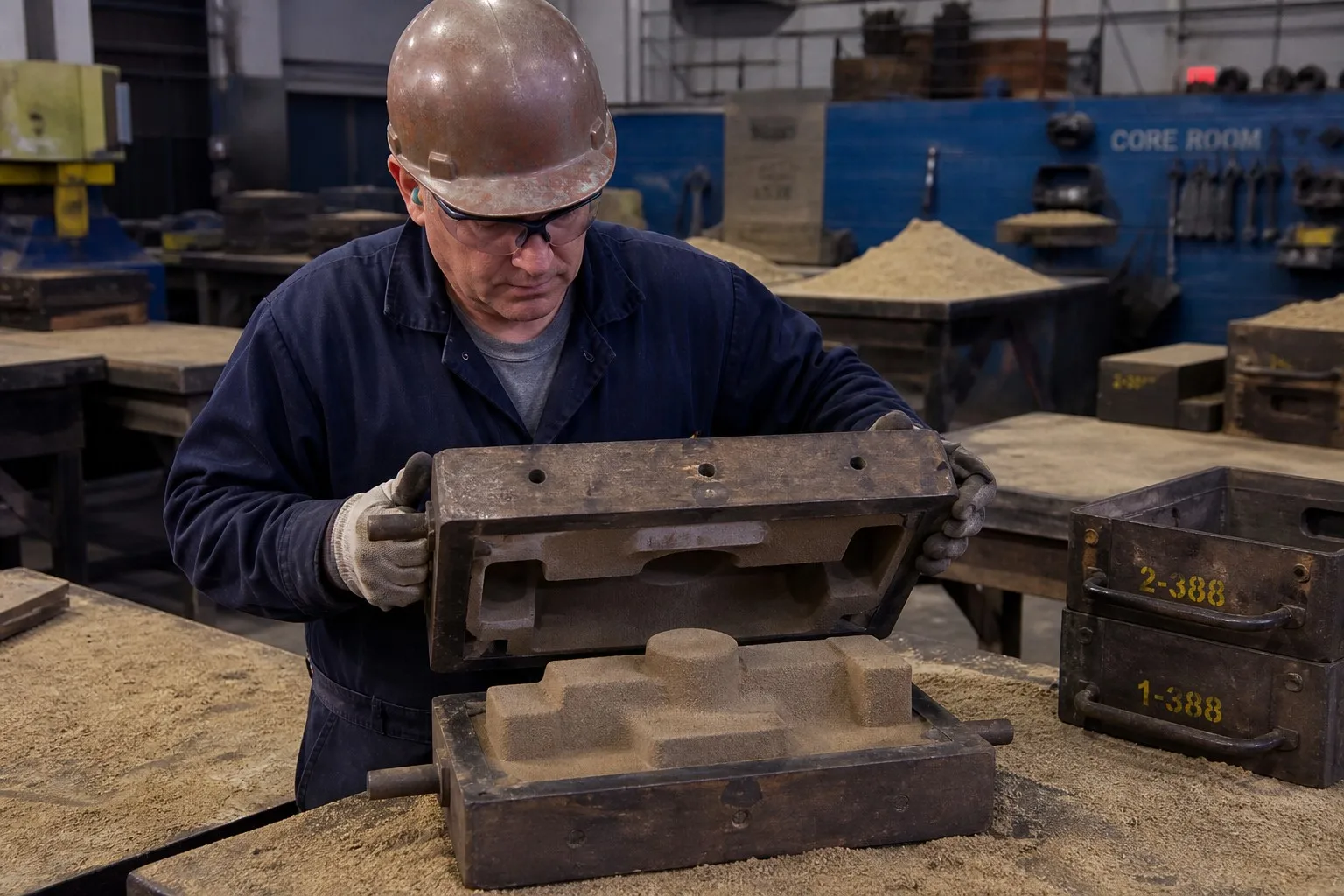
Cores form internal passages and undercuts. Core boxes are the patterns for cores:
| Core Box Type | Description |
|---|---|
| Two-piece box | Most common, split at core centerline |
| Single-piece box | Simple cores |
| Multiple-piece box | Complex cores with multiple draw directions |
| Shell core box | For hot-box and shell cores |
5.2 Core Prints
Core prints are extensions on the pattern that locate the core in the mold:
- Length: typically 25-60% of the core's bearing length, longer for heavier cores
- Support: prints must support the core against buoyancy from molten metal
- Tolerance: print fit controls core shift — a major dimensional defect source
6. Pattern Quality Control
6.1 Pattern Inspection
| Check | Method | Frequency |
|---|---|---|
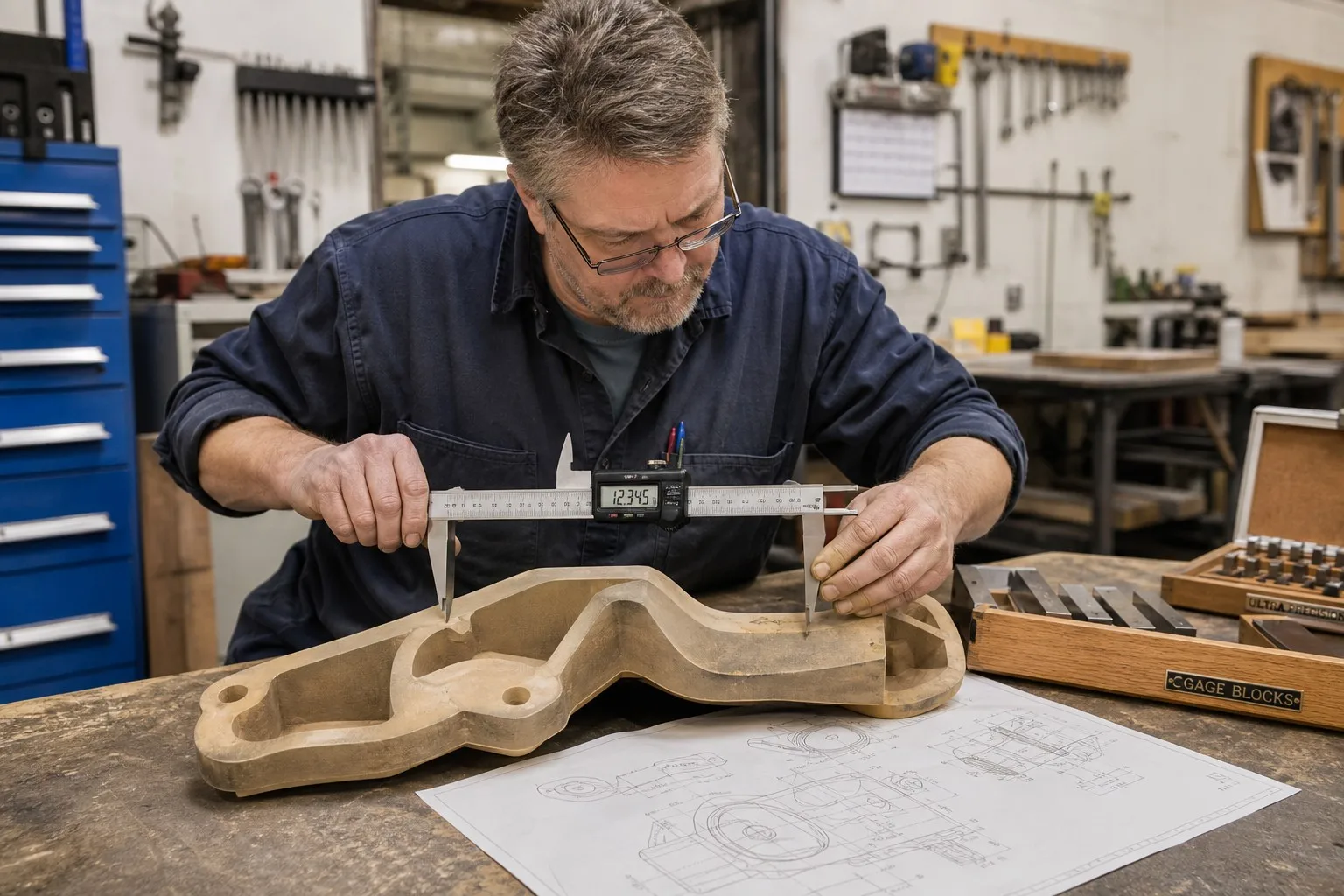
| Dimensions | Calipers, CMM | At manufacture, annually, after repair |
| Surface condition | Visual | Every use |
| Wear | Visual, dimensional spot check | Monthly |
| Fit on match plate | Gauge check | At manufacture |
| Core print location | Dimensional verification | At manufacture |
| Distortion/warpage | Straight edge, CMM | Annually |
6.2 Pattern Storage
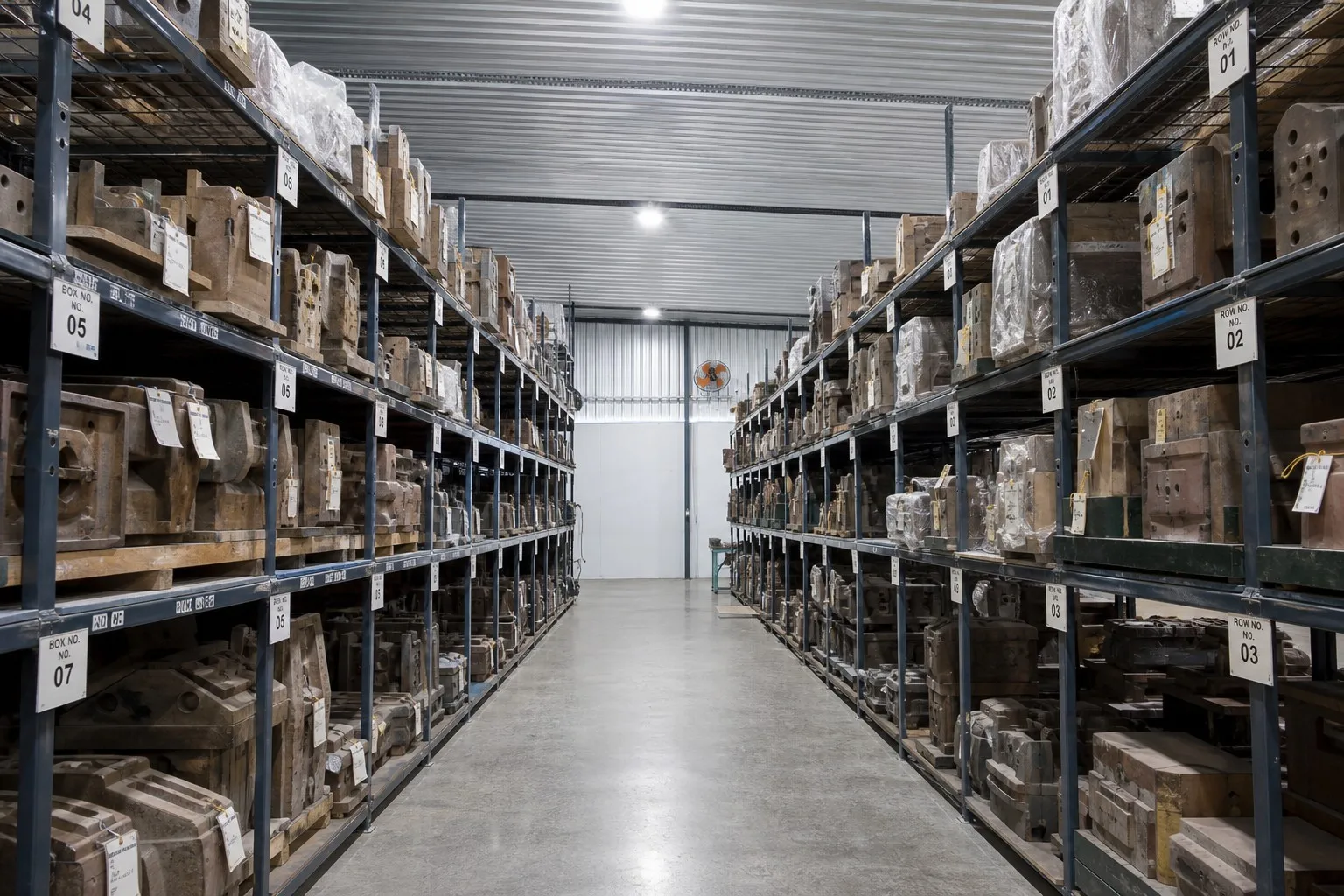
- Clean, dry, temperature-stable storage (wood especially)
- Match plates stored vertically on racks or in protective frames
- Critical patterns covered or sealed against dust and moisture
- Color coding or labels identifying pattern, part number, and revision
7. Pattern Life and Maintenance
| Material | Typical Life (molds) | Maintenance |
|---|---|---|
| Wood | 100-1,000 | Refinish, repair splits, re-seal |
| Resin | 1,000-10,000 | Clean, touch-up surface |
| Aluminum | 10,000-100,000+ | Dressing, re-polish, weld repair |
| Cast iron | 100,000+ | Grind, re-machine wearing faces |
Regular maintenance:
- Clean pattern after each run
- Inspect for wear, damage, and distortion
- Apply release agents as required
- Repair defects promptly — a damaged pattern damages every casting
- Document repair history (pattern log)
8. Pattern Quality → Casting Quality
| Pattern Defect | Casting Consequence |
|---|---|
| Worn/damaged surface | Rough surface, inclusions, dimensional drift |
| Incorrect shrinkage allowance | Consistent dimensional error |
| Inadequate draft | Mold damage, sand drag, defects |
| Distorted core prints | Core shift, wall thickness variation |
| Wrong machining allowance | Machined surfaces out of tolerance or under-metal |
| Poor parting line fit | Flash, mismatch |
The pattern is the first place money is spent — and the cheapest place to invest in quality.
9. Modern Pattern Making
| Technology | Benefit |
|---|---|
| CAD/CAM design | Perfect geometry transfer, fast revisions |
| CNC machining | Repeatable precision to 0.05 mm |
| 3D printing (sand, polymer) | Prototype patterns in days |
| Casting simulation | Validates gating, risers, and allowances before tooling |
| Laser scanning | Pattern inspection, reverse engineering |
Conclusion
Pattern making is where casting quality is decided. The allowances, draft, core prints, and surface finish engineered into the pattern determine what the foundry can achieve at every subsequent step — molding, pouring, and machining.
Dandong City Pengxin Machinery Co., Ltd. operates an in-house pattern shop serving its sand and shell mold lines — designing patterns in CAD, machining them to CNC precision, and maintaining them under documented inspection and storage systems. From prototype wood patterns to production aluminum match plates, tooling is treated as the foundation of quality that it is.
If you are starting a new casting program, involve the foundry at the pattern stage — the earliest and least expensive opportunity to lock in quality and cost.
Dandong City Pengxin Machinery Co., Ltd. — Heavy Castings and Precision Machining, Since 1958.
CATEGORIES
LATEST NEWS
CONTACT US
Name: John Yu
Mobile:+86 15941574876
Tel:+86 15941574876
Whatsapp:+86 15941574876
Email:john_yu@metals-casting.com
Add:Wangjiapu Group, Xinan Village, Qianyang Town, Donggang City, Dandong City, Liaoning Province, China.